Anthurium pucayacuense cf. x Anth. besseae aff
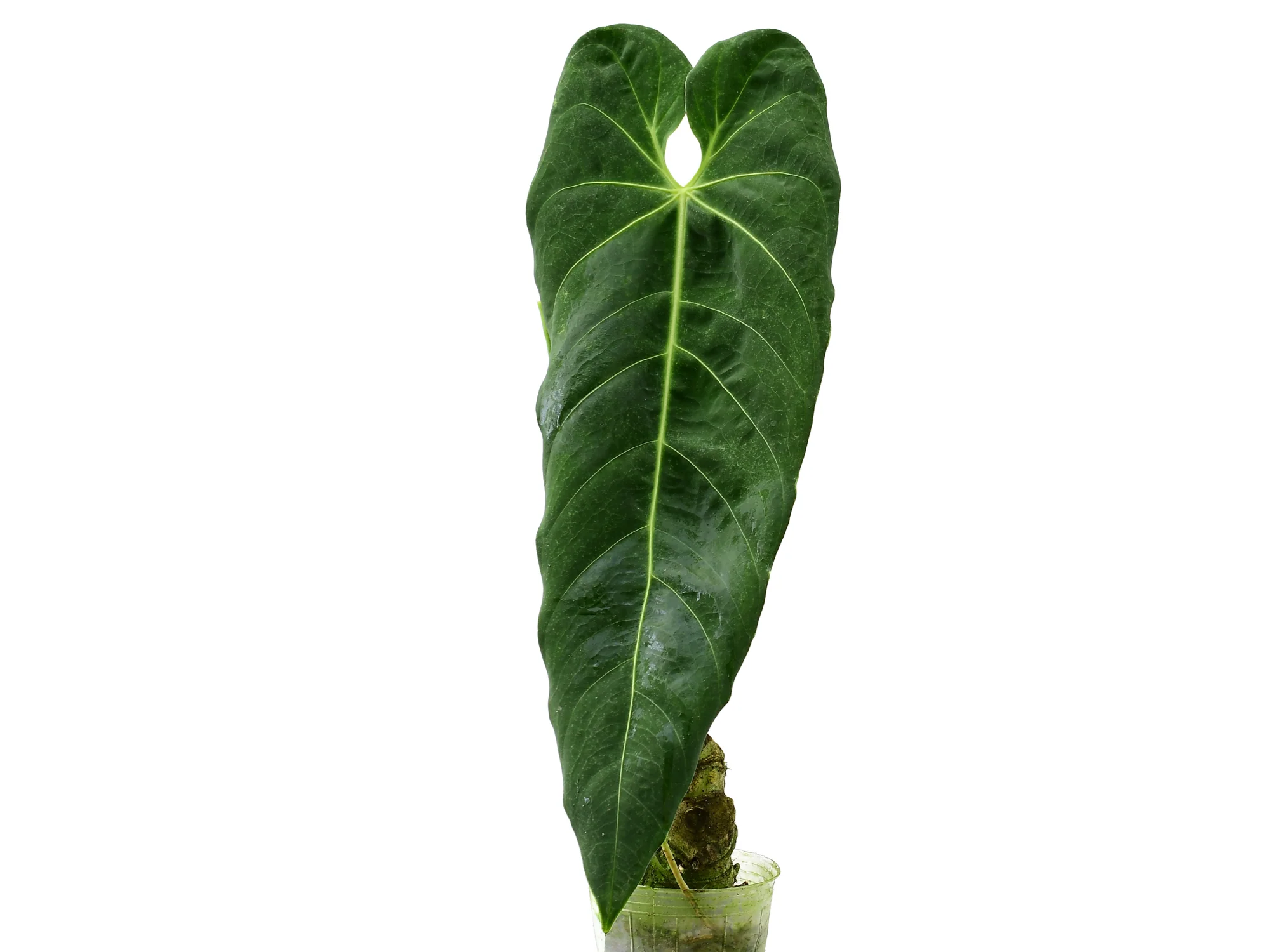
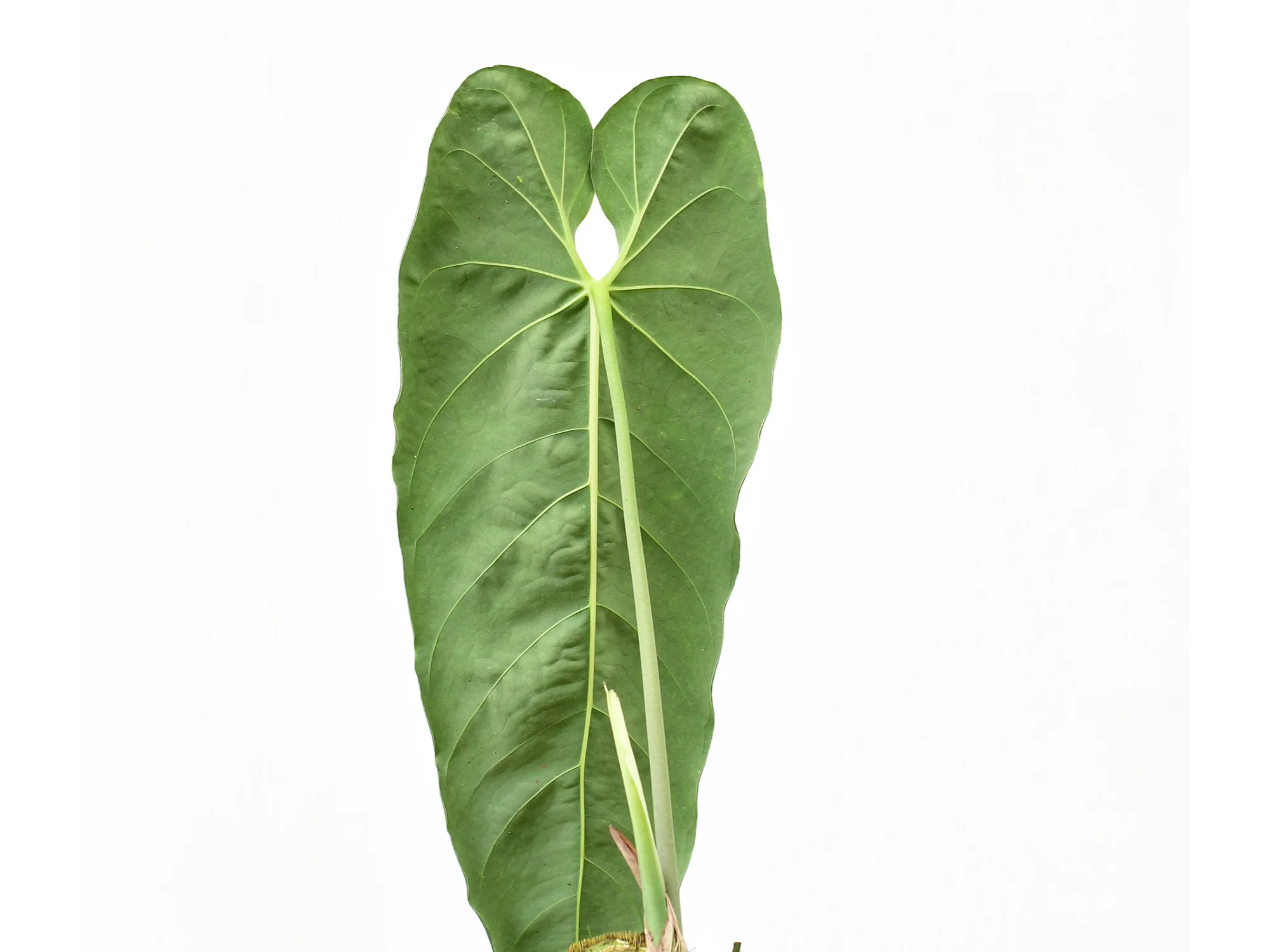
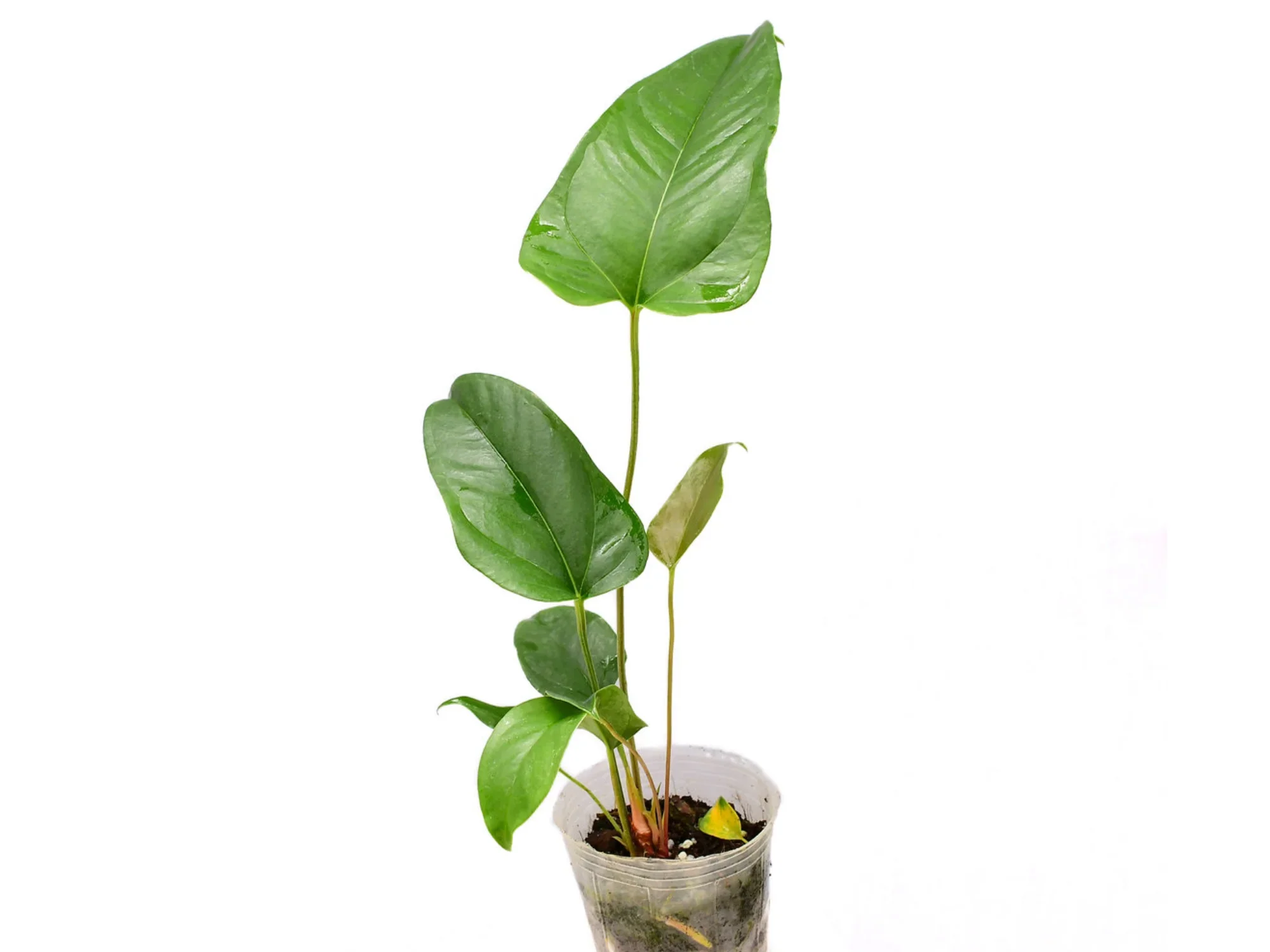
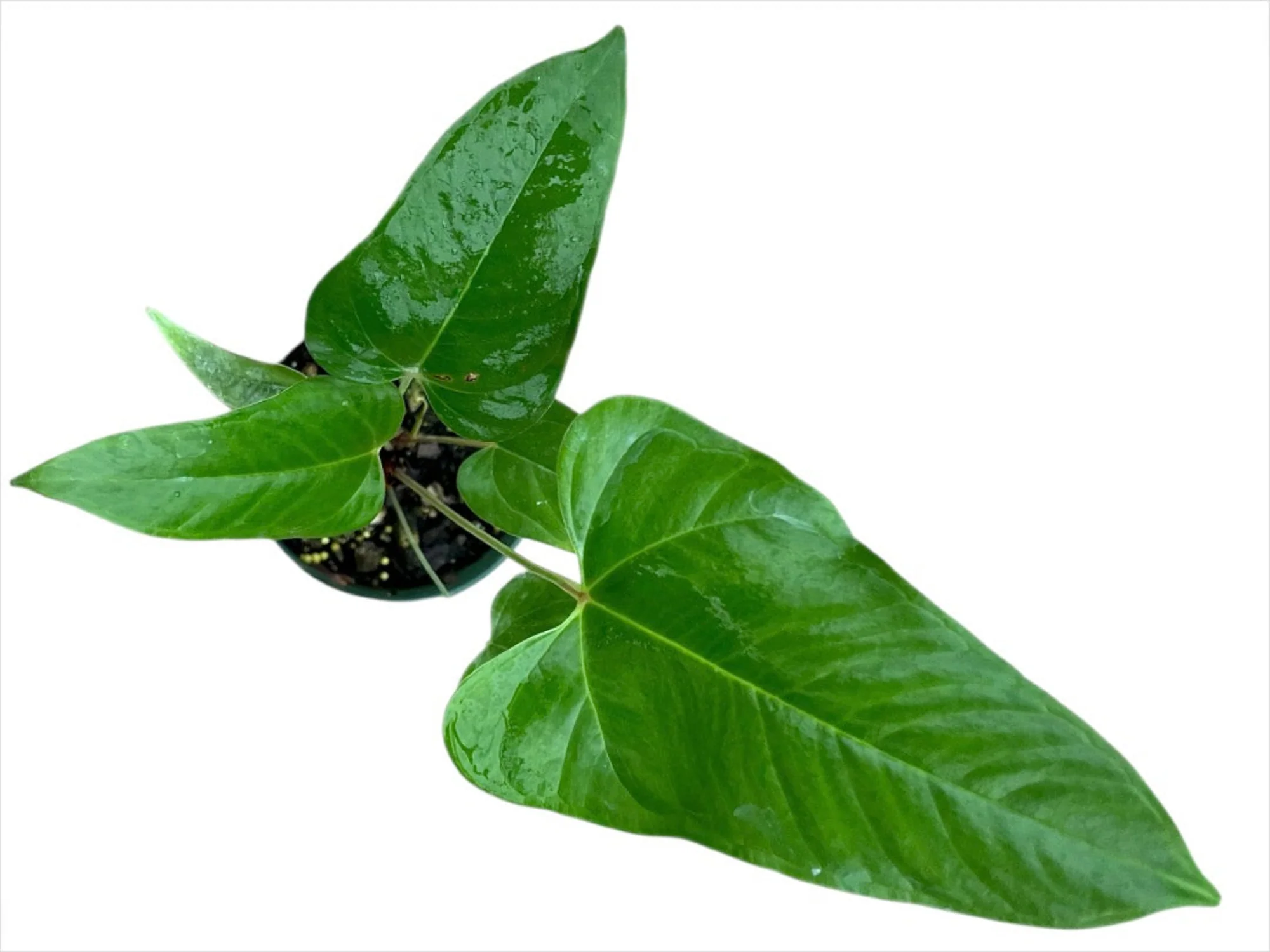
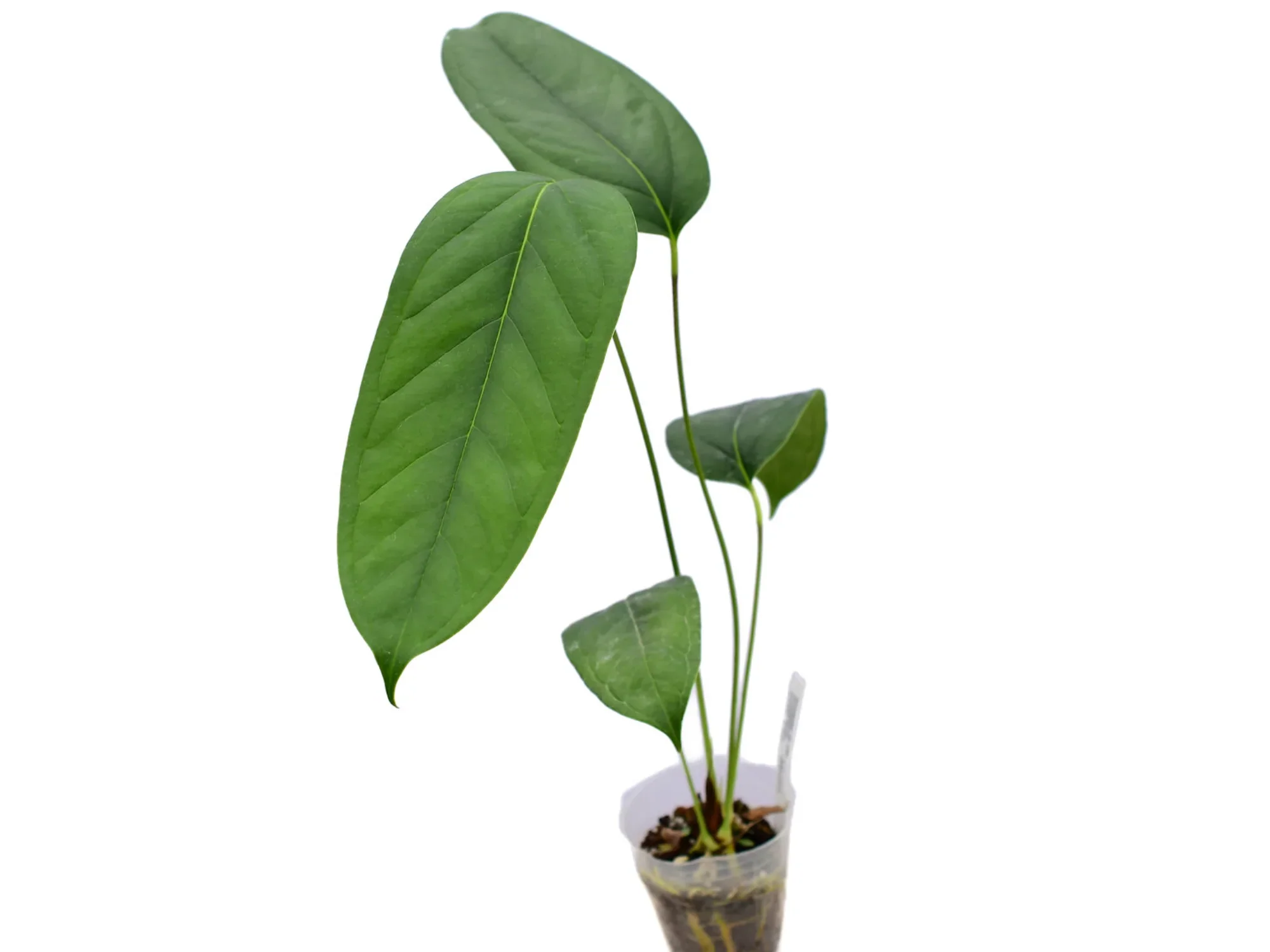
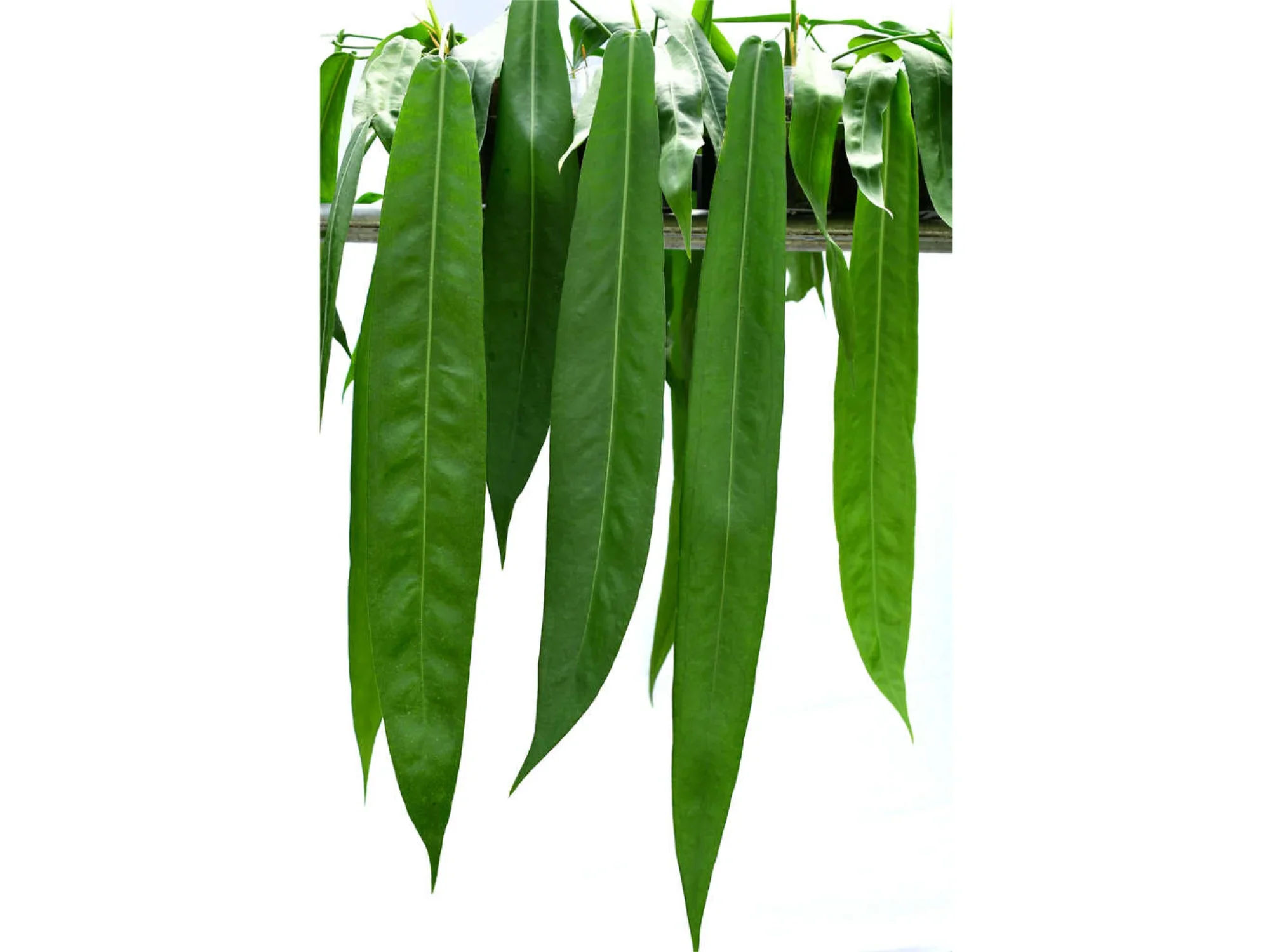
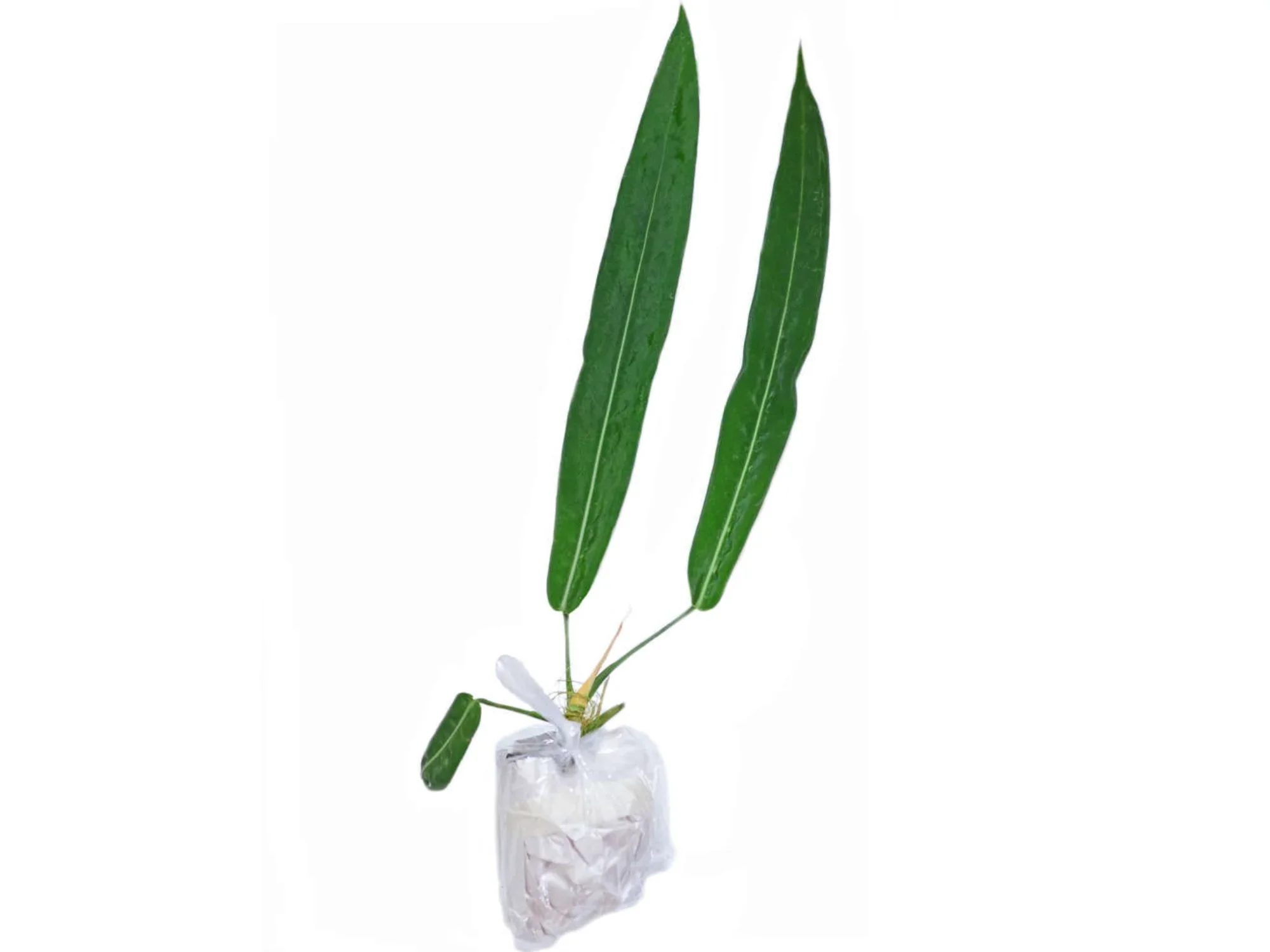
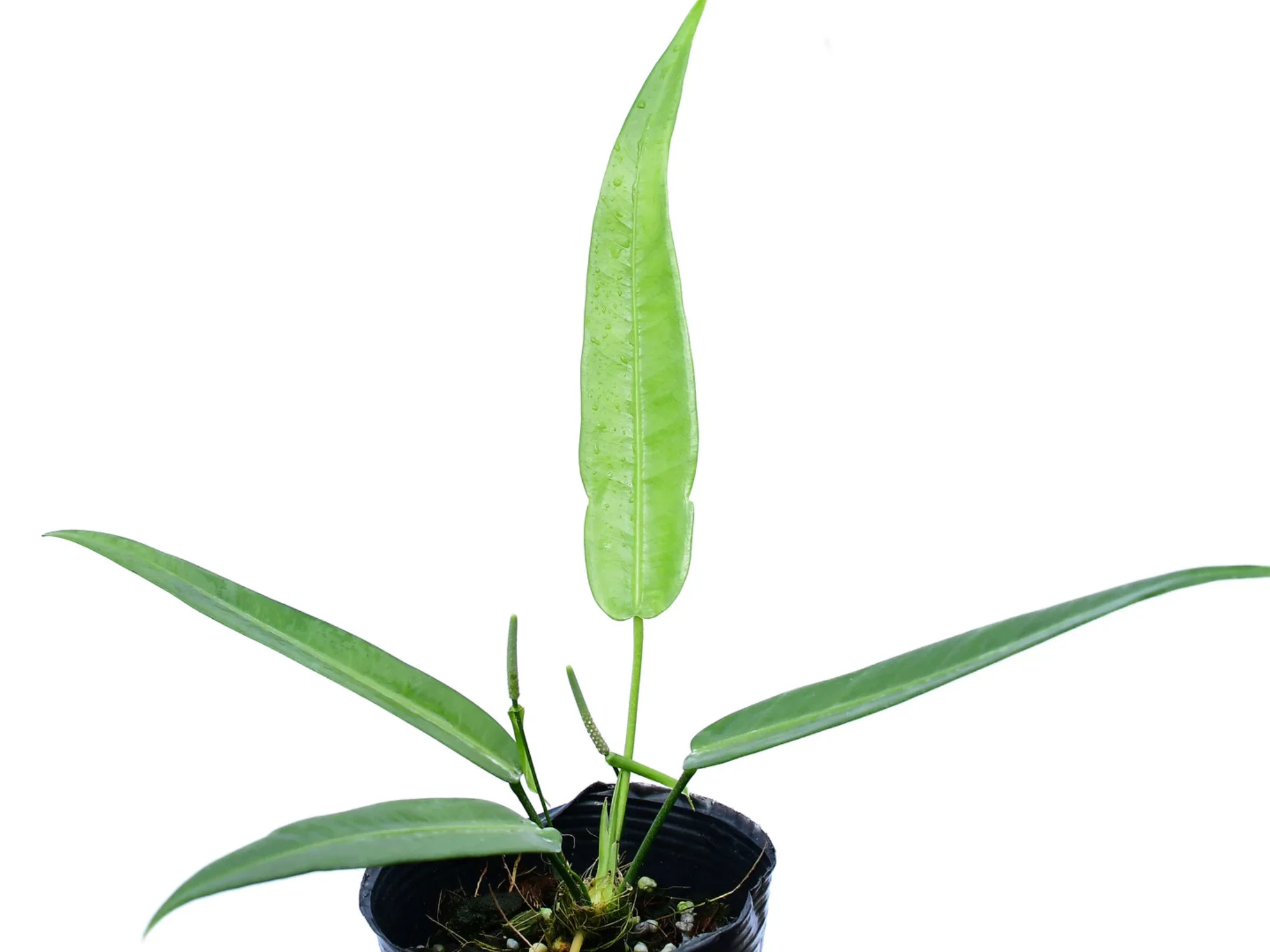
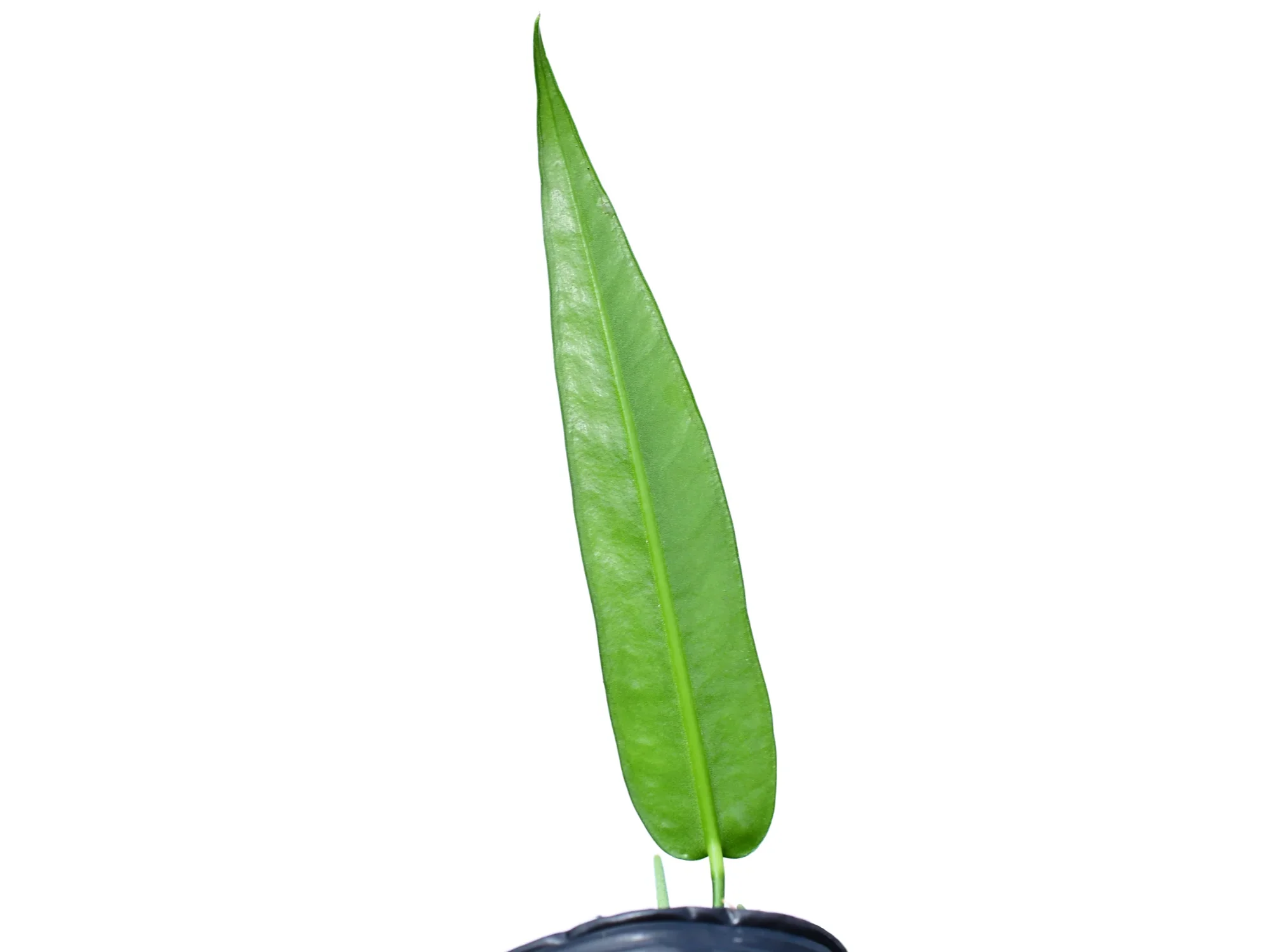
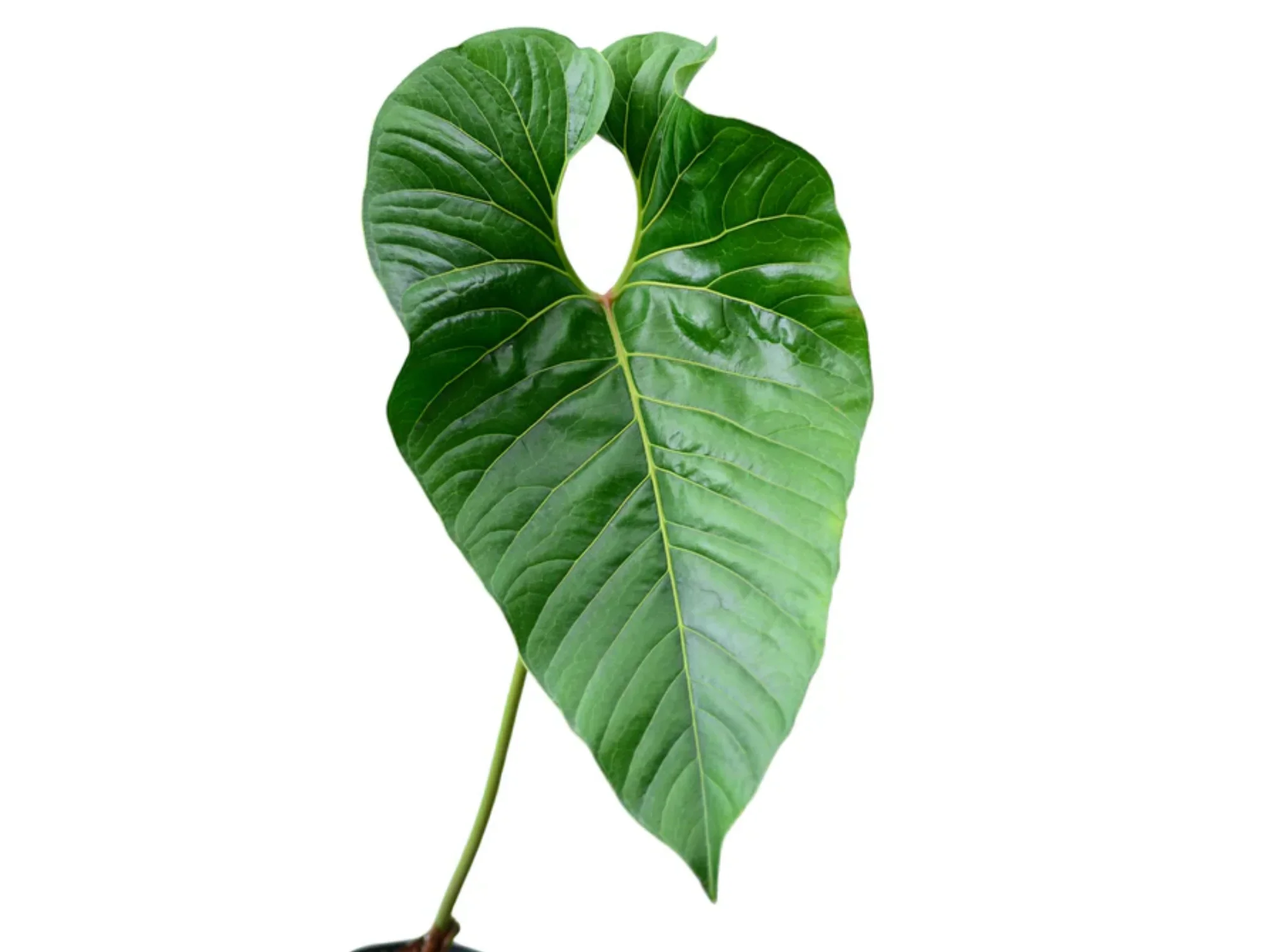
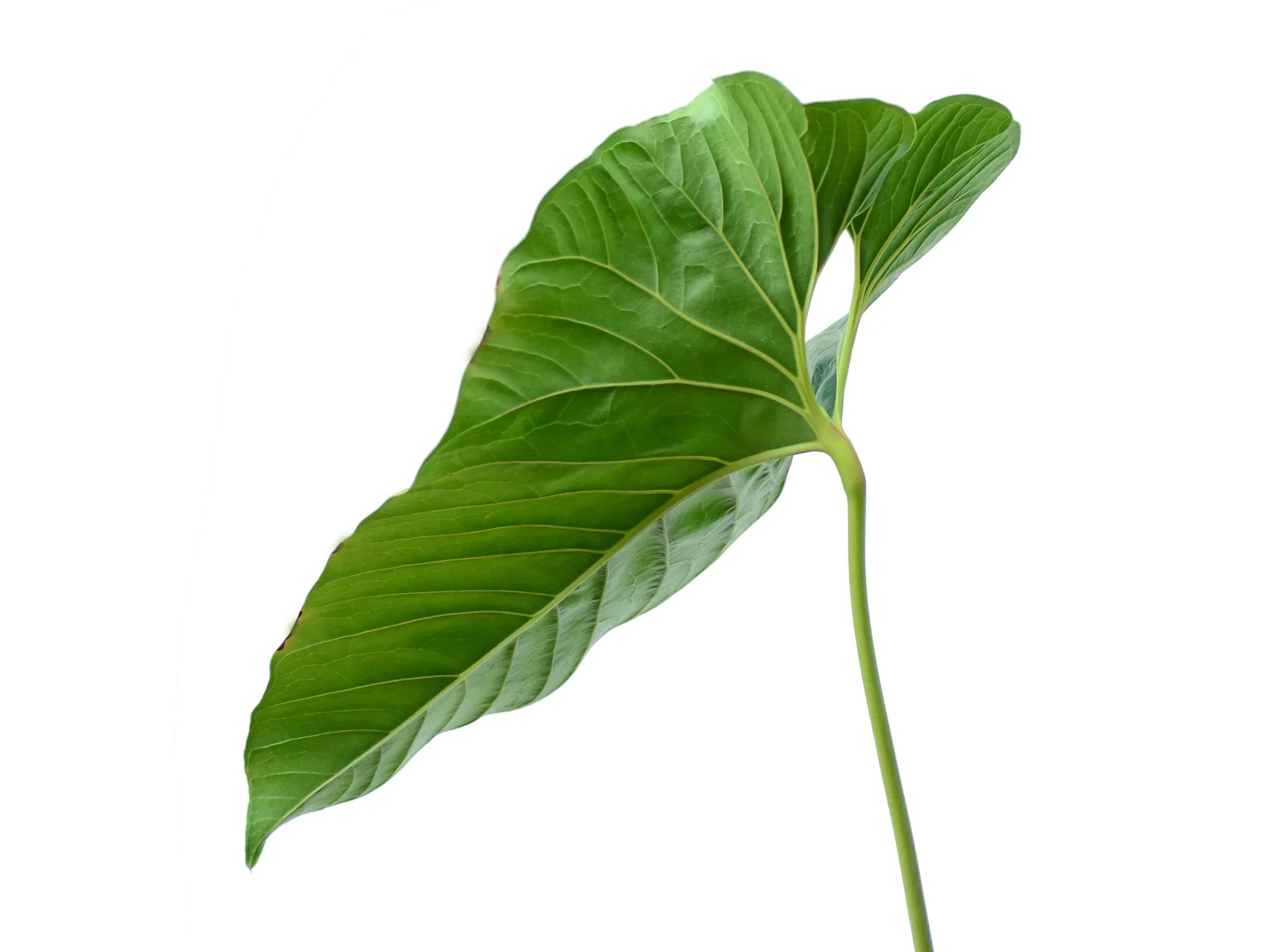
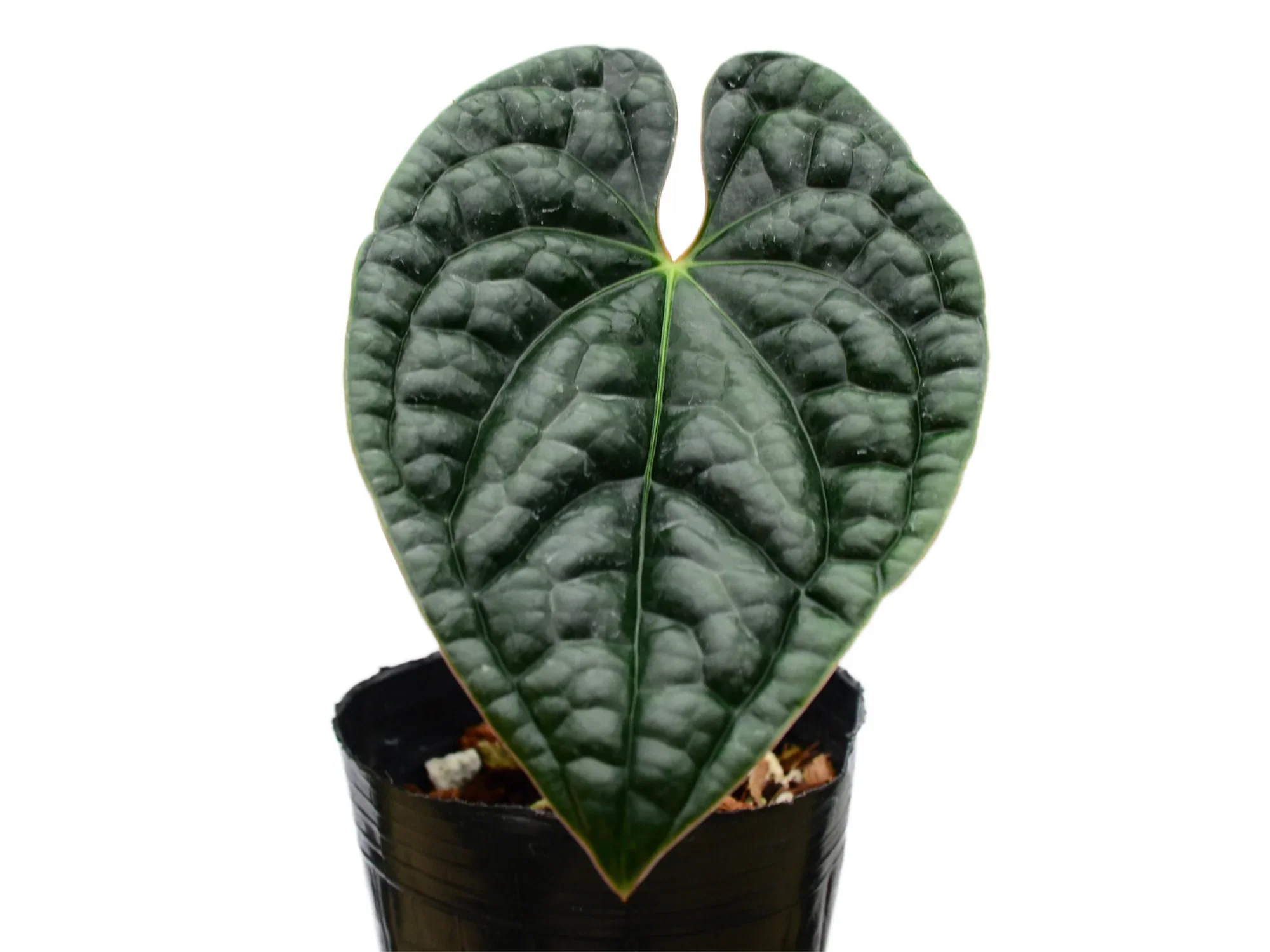
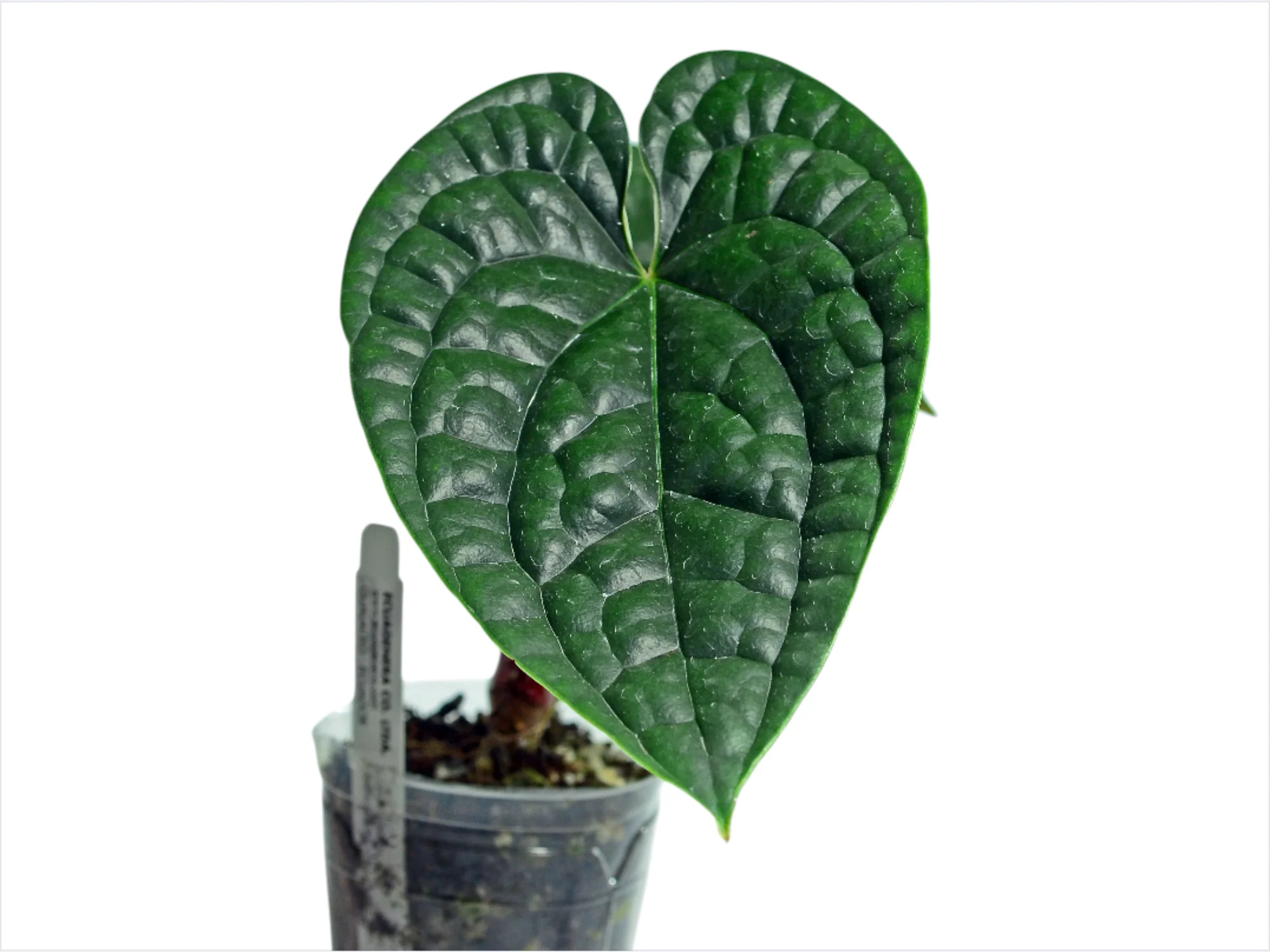
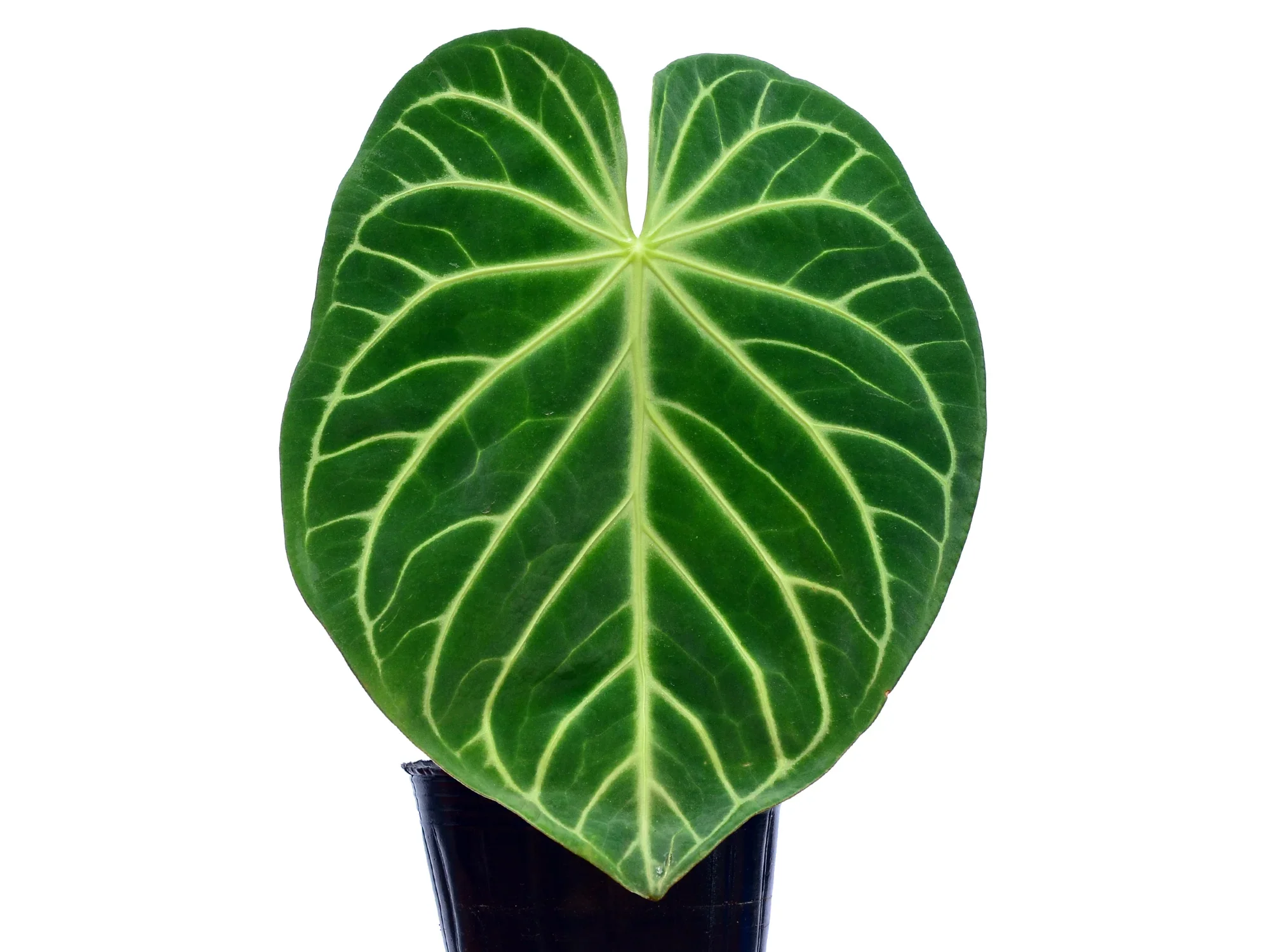
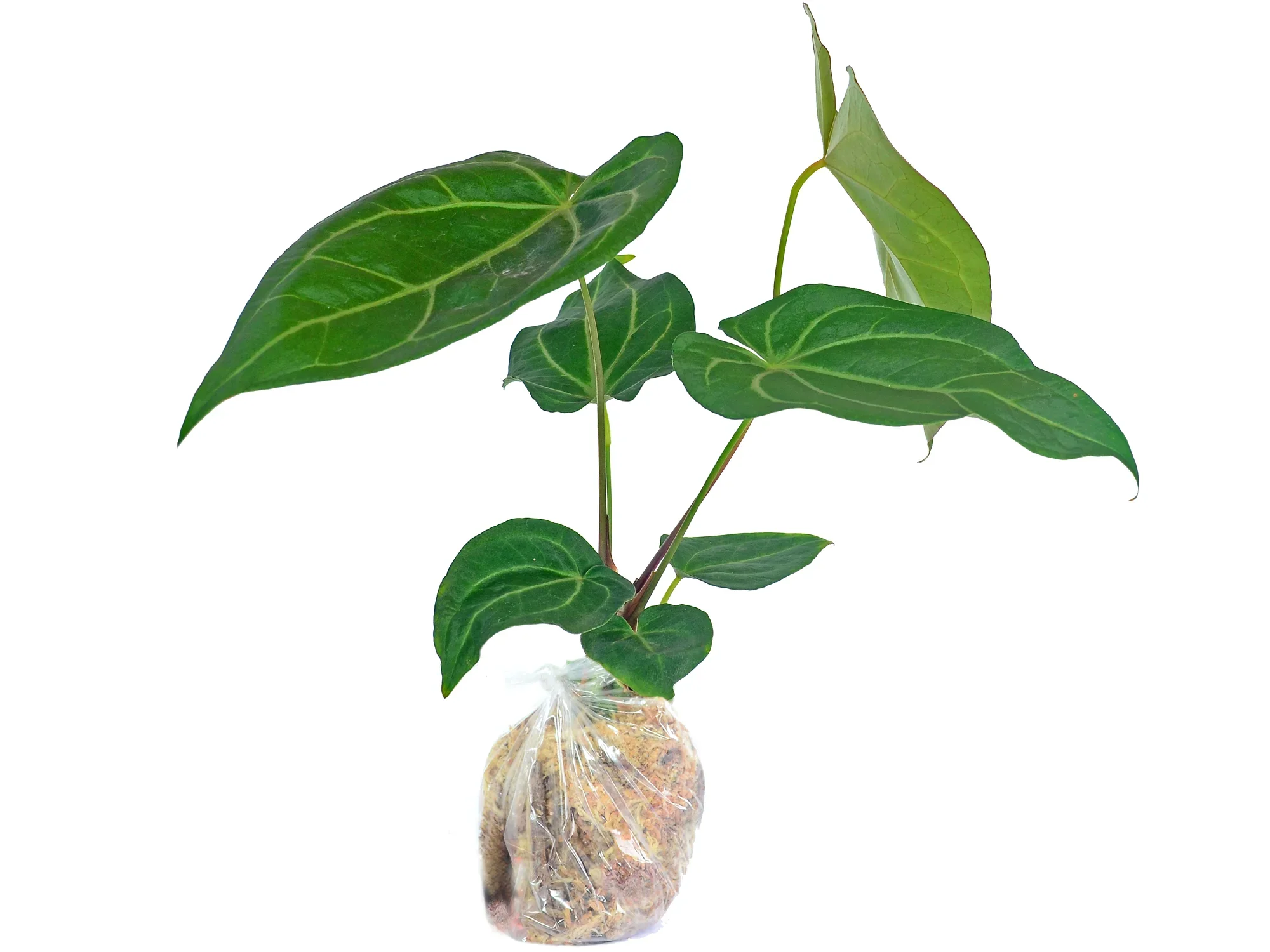
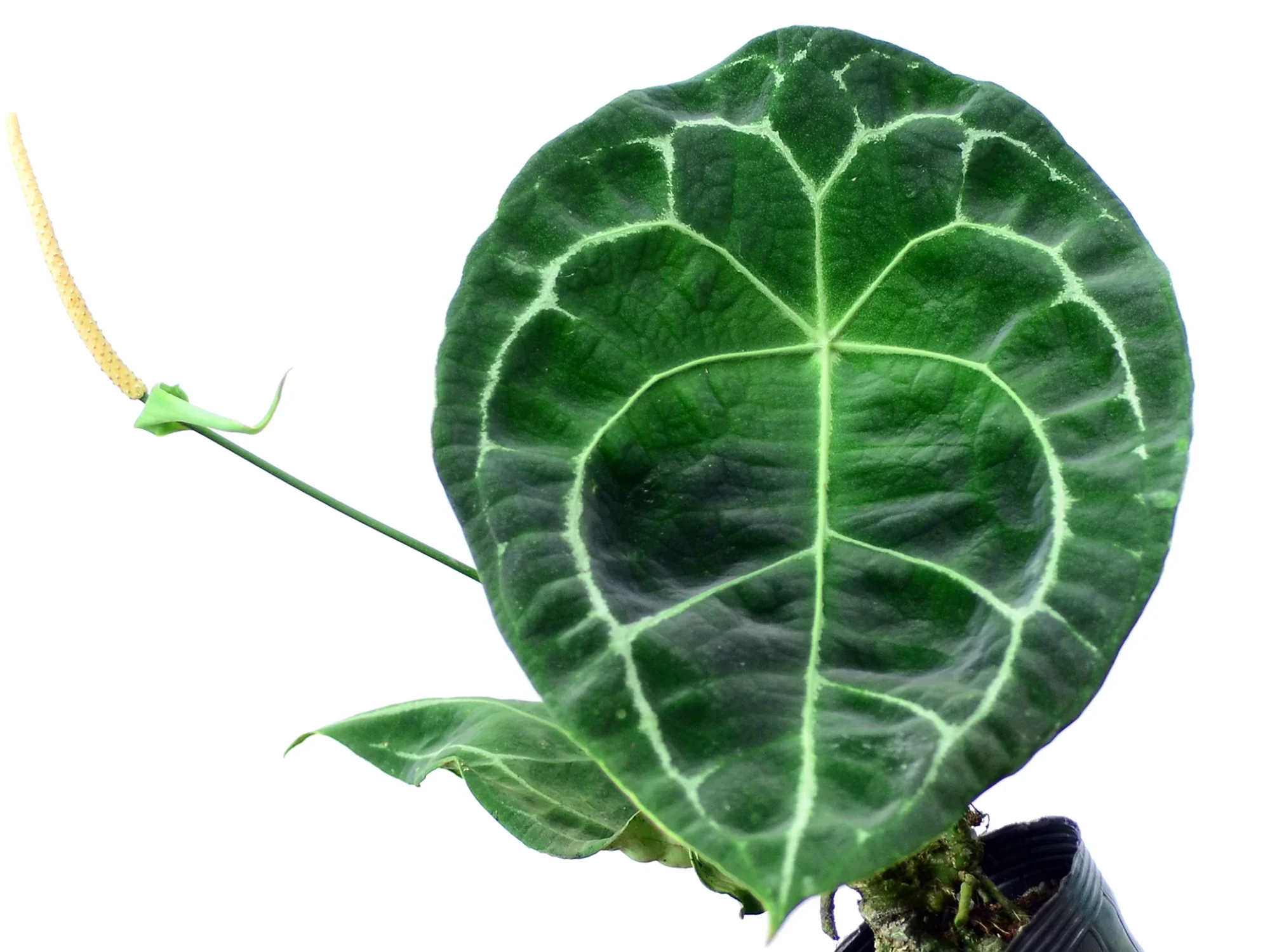
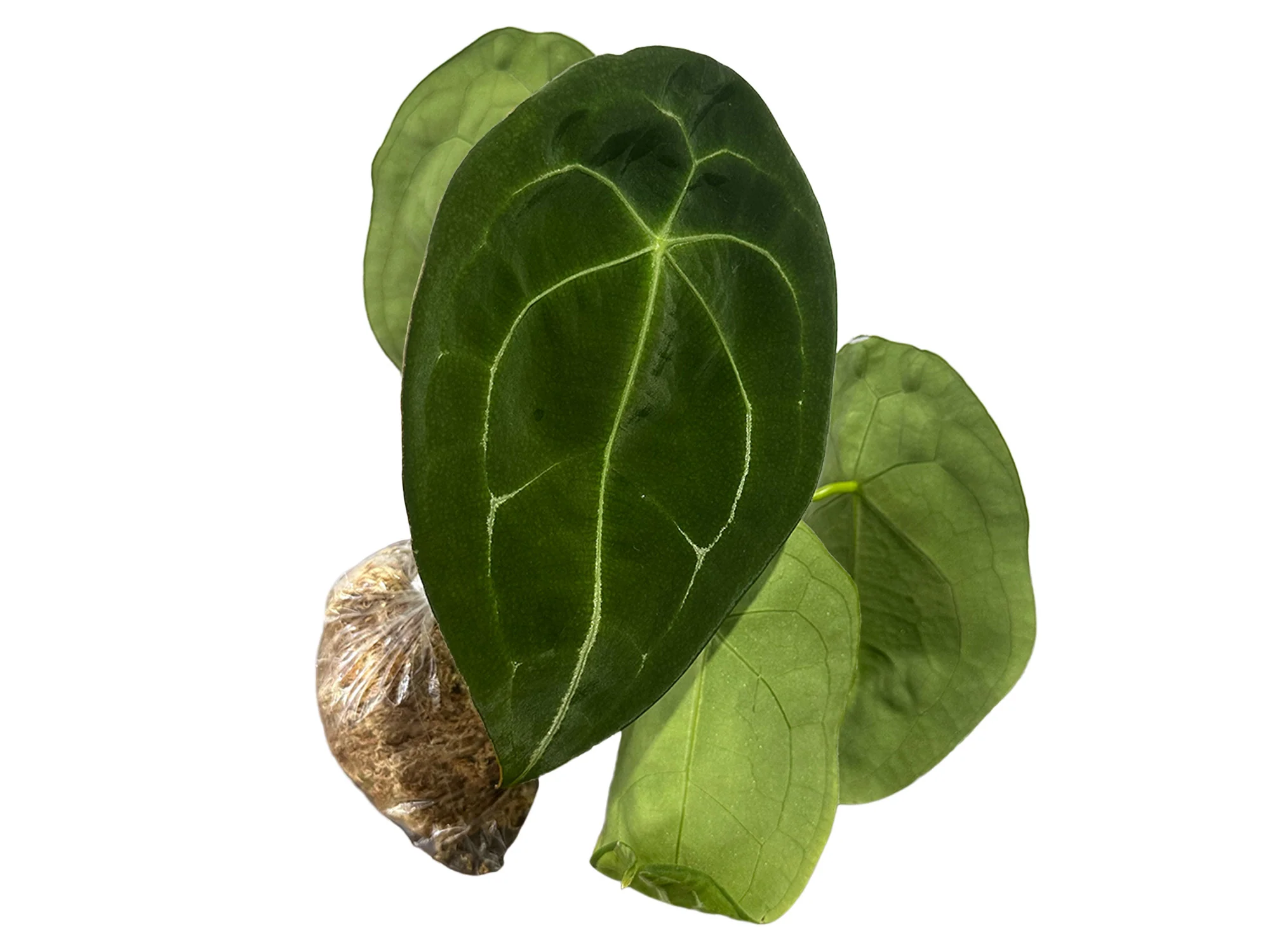
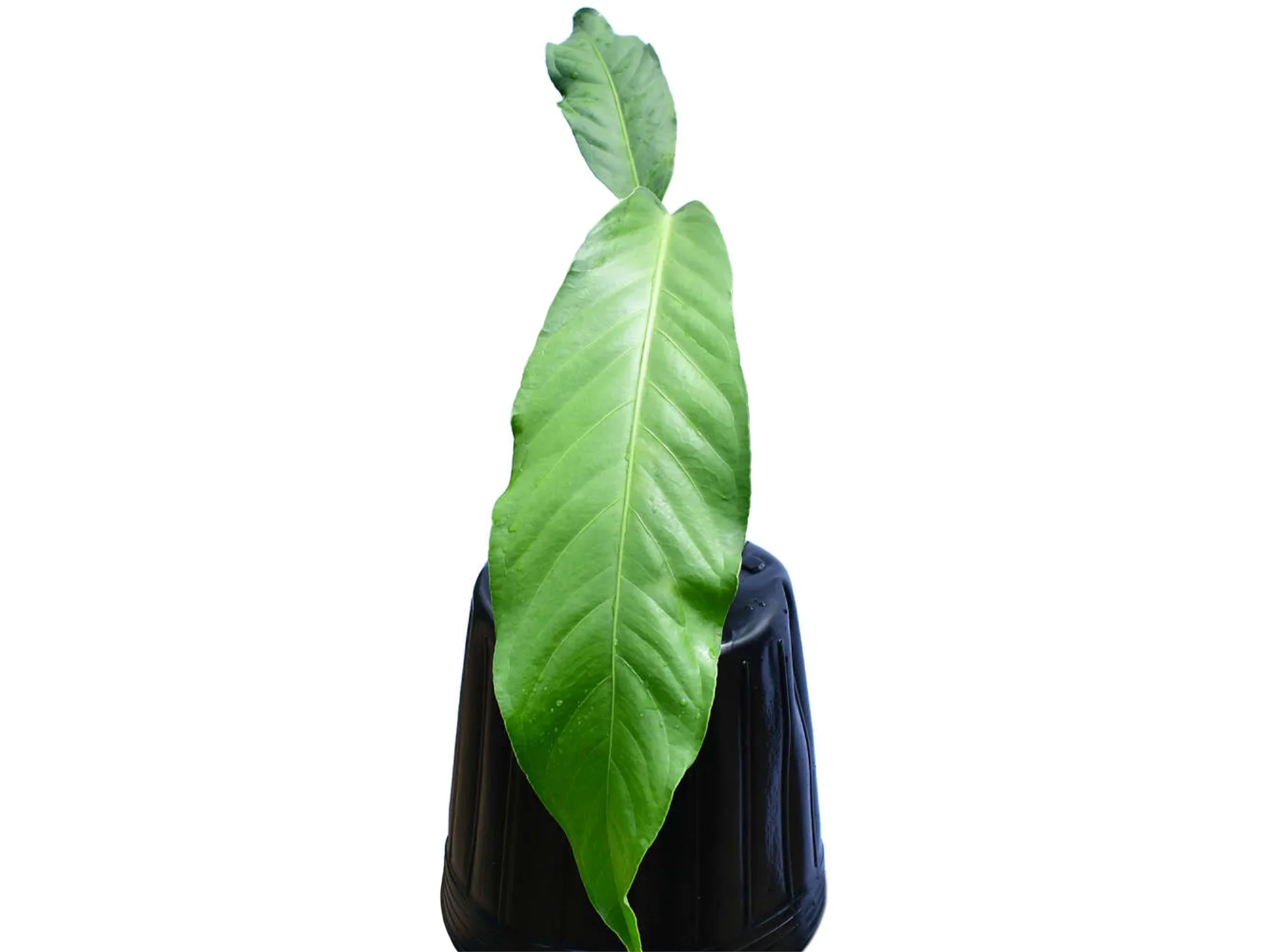
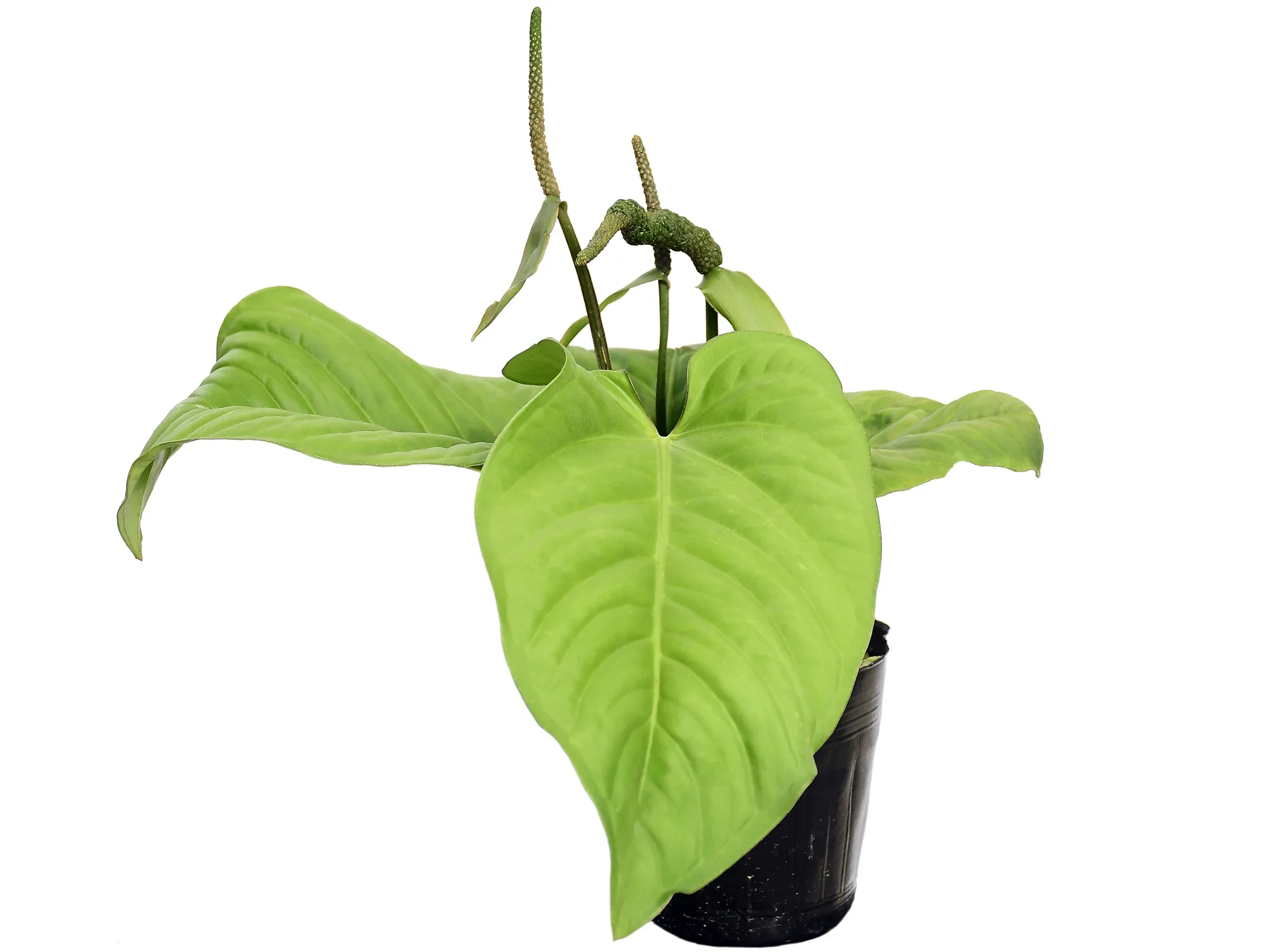
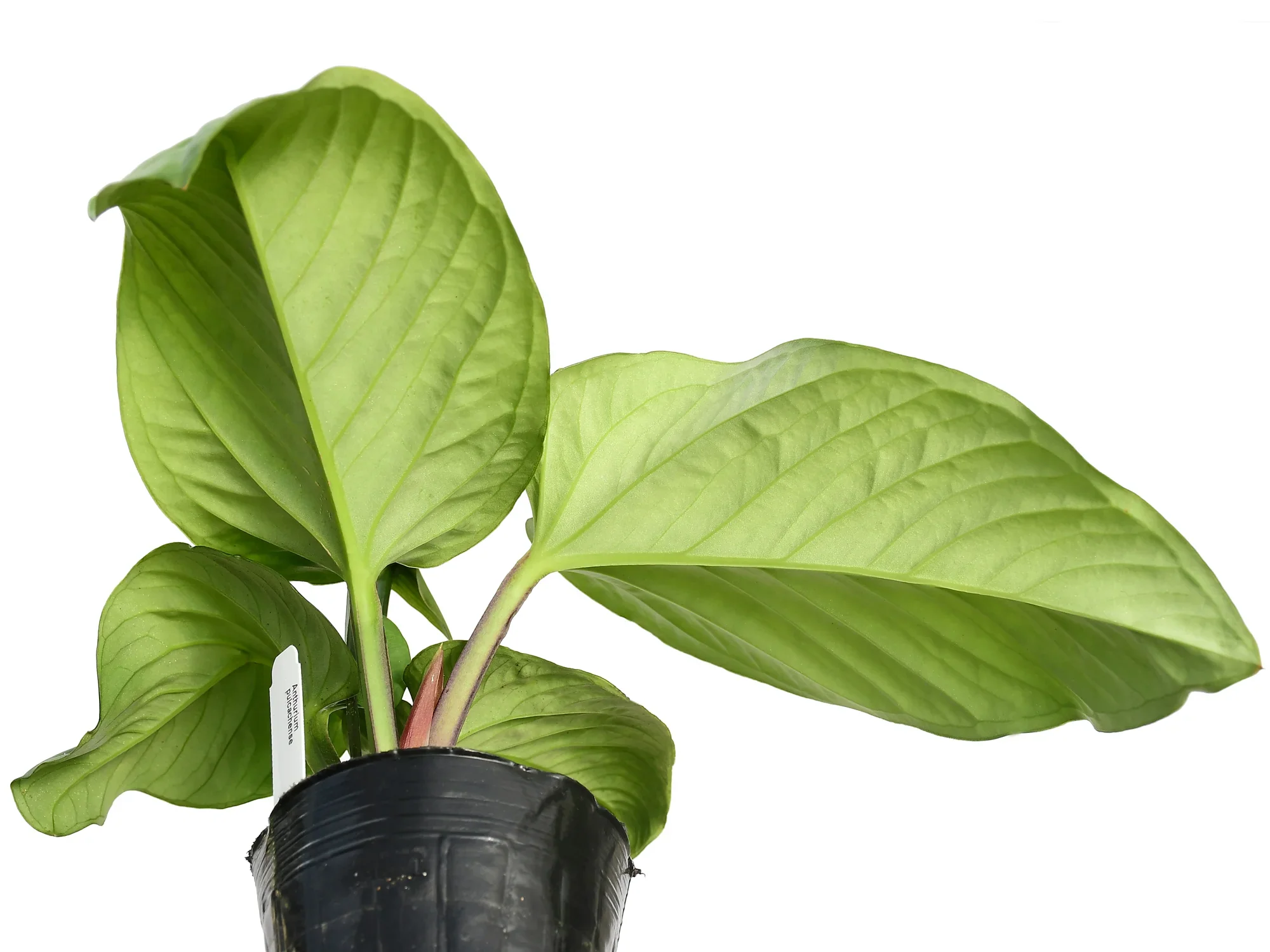
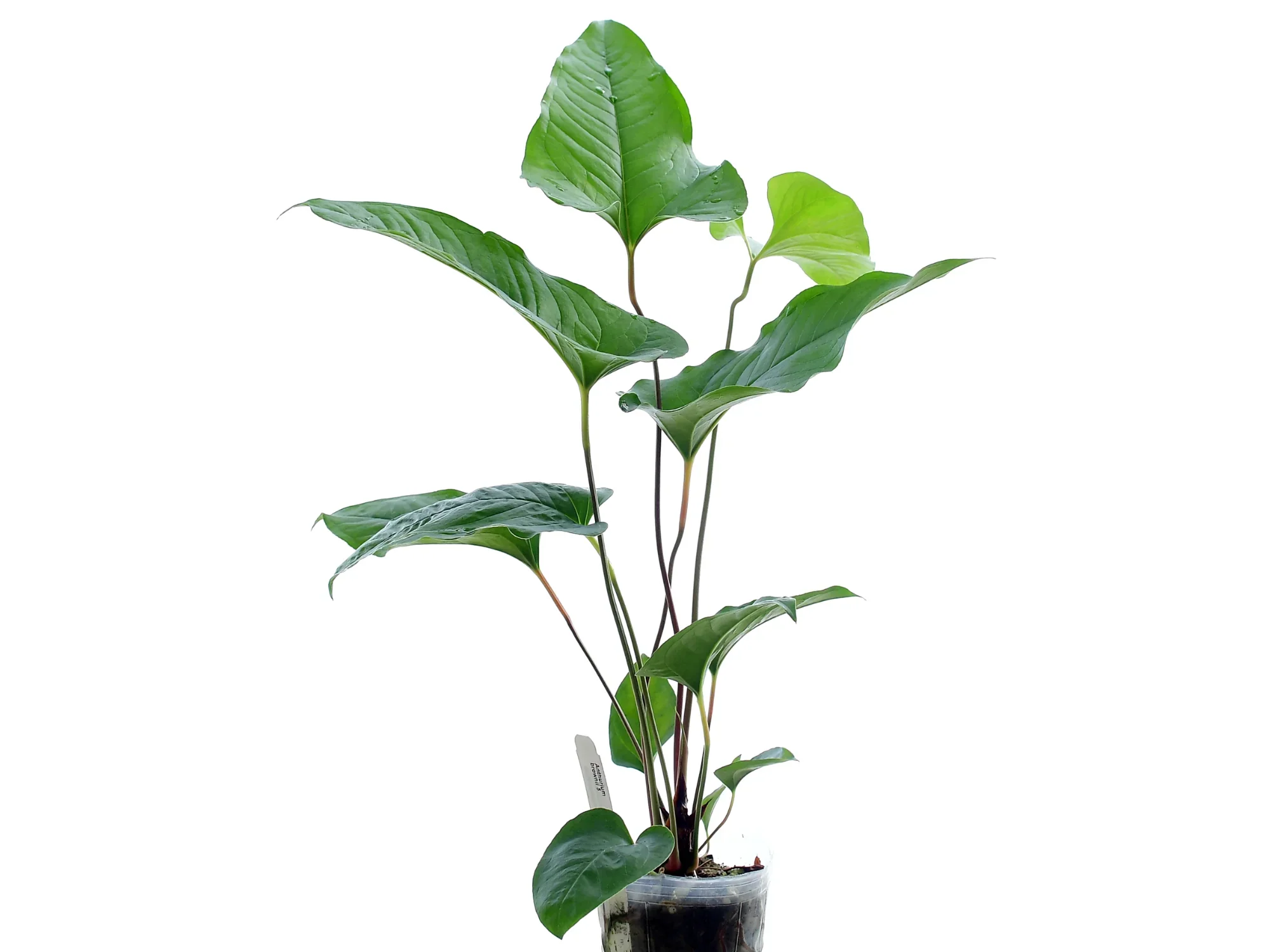
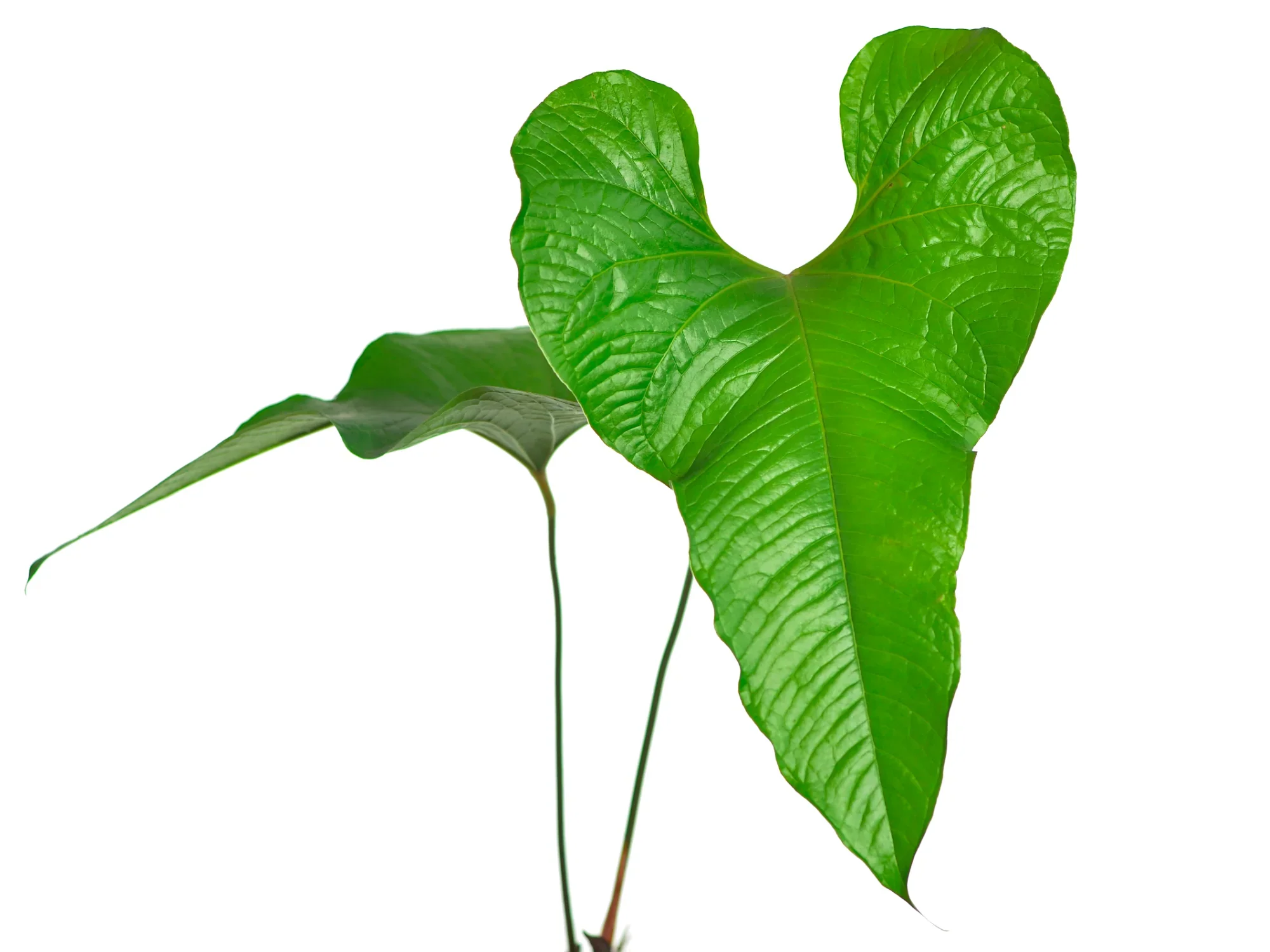
A hybrid of Anth. pucayacuense cf. × Anth. besseae aff., two warm-growing species from the cloud forests of South America. The foliage is elongated-cordate with well-defined basal lobes, a prominent midrib, visible secondary venation, and a smooth to semi-matte surface on slender, upright petioles.
- Light: Bright indirect light with 40–60% shade cloth; avoid direct sun exposure, which can bleach or scorch the leaves.
- Temperature: 65–82°F (18–28°C); a warm tropical grower that benefits from stable conditions without cold drafts.
- Humidity: 70–85%; consistently high humidity supports healthy leaf development and maintains the smooth surface texture.
- Watering: Water thoroughly when the top layer of substrate begins to dry; avoid waterlogging and never allow roots to sit in standing water.
Additional Notes
Hybrid Advantage: This cross brings together two closely related wild-collected species, combining their natural vigor and distinctive elongated leaf architecture into a plant with strong ornamental appeal and adaptability to warm indoor conditions.
Arrival & Establishment Recommendation: Upon arrival, plant promptly in a well-draining aroid mix (chunky perlite, bark, and coco coir). Water generously at first planting to rehydrate the roots and encourage rapid establishment.
Product Information
Product Information
Shipping & Returns
Shipping & Returns
Anthurium pucayacuense cf. x Anth. besseae aff
Anthurium pucayacuense cf. x Anth. besseae aff
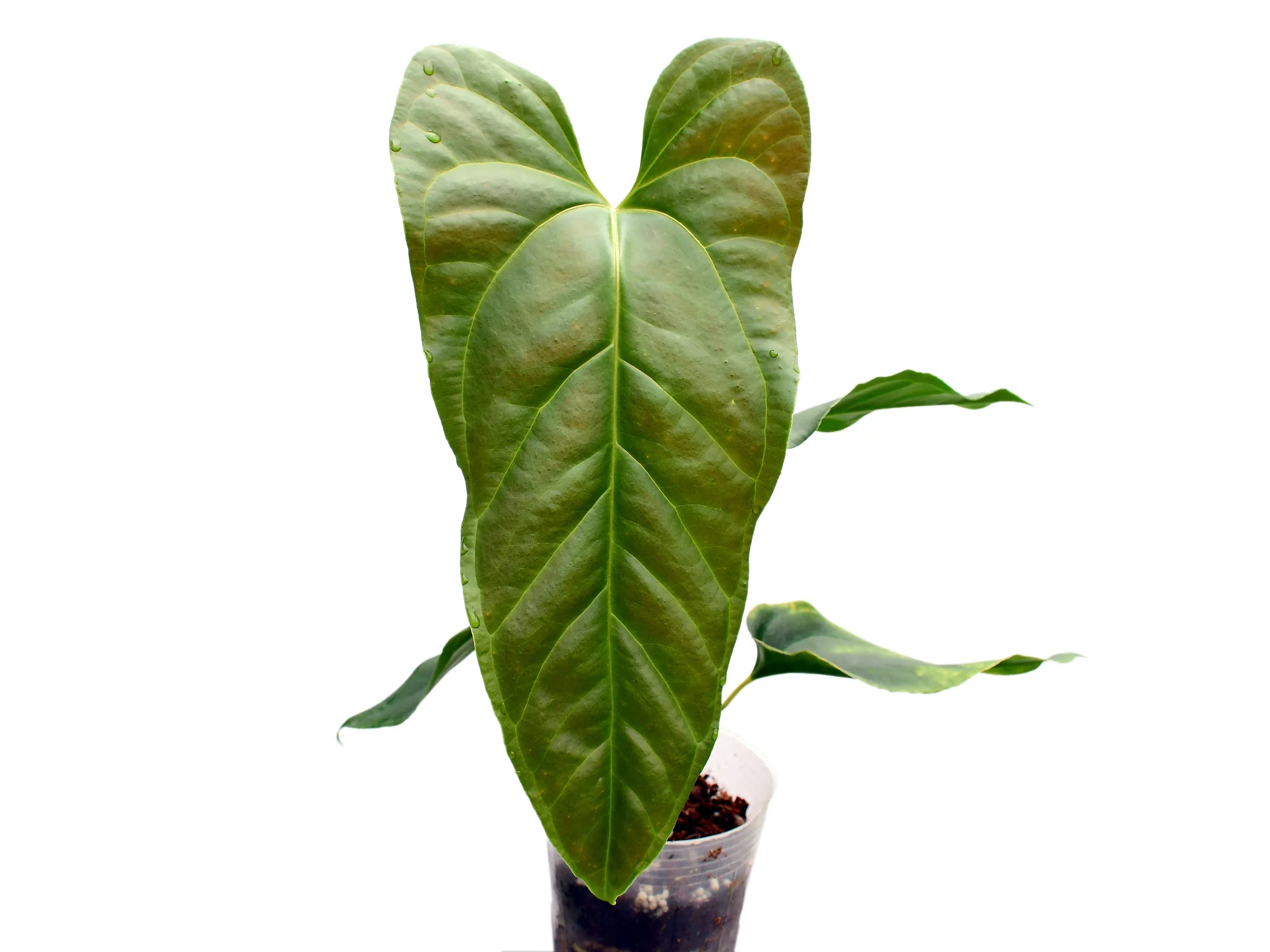
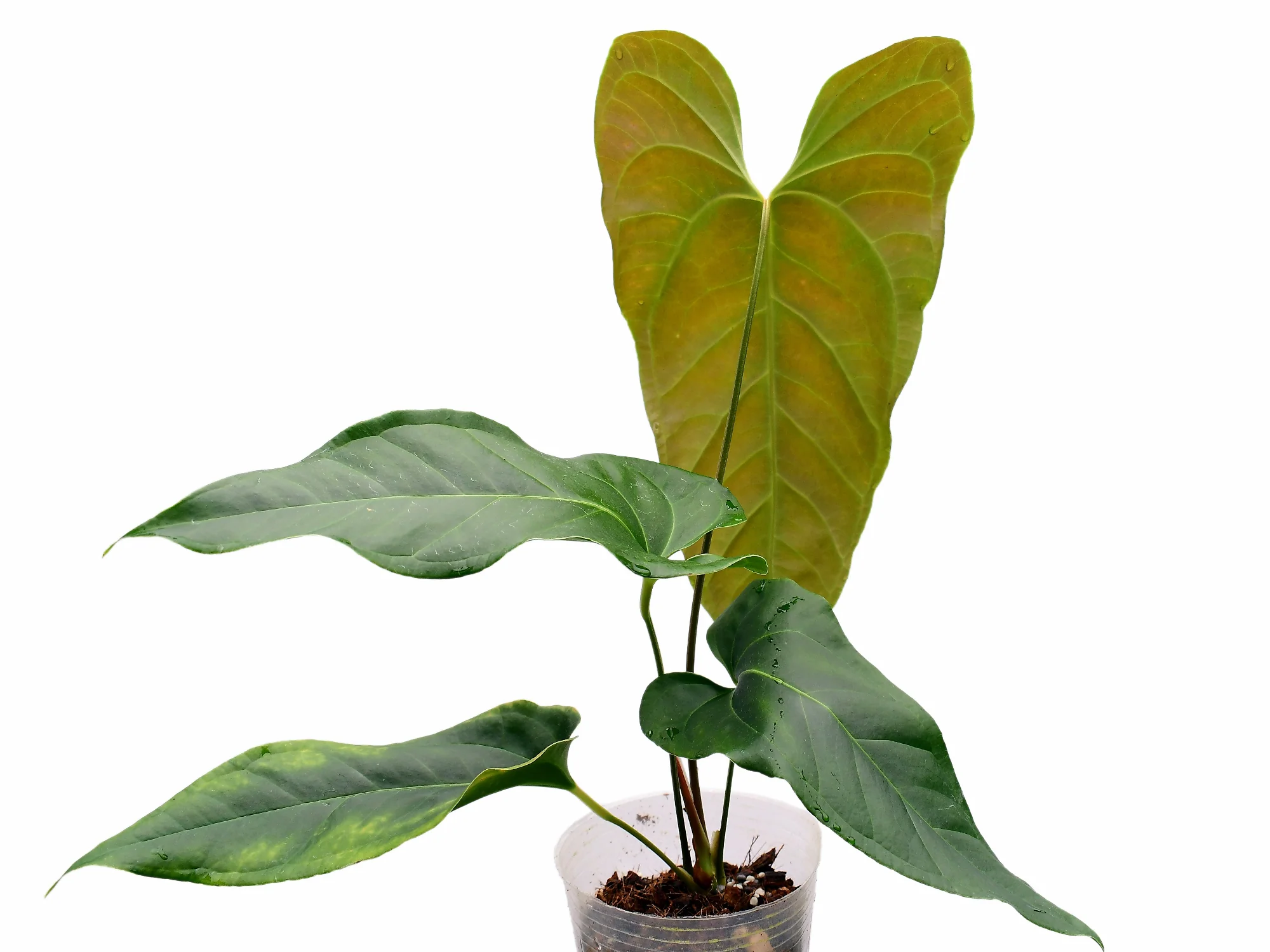
A hybrid of Anth. pucayacuense cf. × Anth. besseae aff., two warm-growing species from the cloud forests of South America. The foliage is elongated-cordate with well-defined basal lobes, a prominent midrib, visible secondary venation, and a smooth to semi-matte surface on slender, upright petioles.
- Light: Bright indirect light with 40–60% shade cloth; avoid direct sun exposure, which can bleach or scorch the leaves.
- Temperature: 65–82°F (18–28°C); a warm tropical grower that benefits from stable conditions without cold drafts.
- Humidity: 70–85%; consistently high humidity supports healthy leaf development and maintains the smooth surface texture.
- Watering: Water thoroughly when the top layer of substrate begins to dry; avoid waterlogging and never allow roots to sit in standing water.
Additional Notes
Hybrid Advantage: This cross brings together two closely related wild-collected species, combining their natural vigor and distinctive elongated leaf architecture into a plant with strong ornamental appeal and adaptability to warm indoor conditions.
Arrival & Establishment Recommendation: Upon arrival, plant promptly in a well-draining aroid mix (chunky perlite, bark, and coco coir). Water generously at first planting to rehydrate the roots and encourage rapid establishment.
Product Information
Product Information
Shipping & Returns
Shipping & Returns
Description
A hybrid of Anth. pucayacuense cf. × Anth. besseae aff., two warm-growing species from the cloud forests of South America. The foliage is elongated-cordate with well-defined basal lobes, a prominent midrib, visible secondary venation, and a smooth to semi-matte surface on slender, upright petioles.
- Light: Bright indirect light with 40–60% shade cloth; avoid direct sun exposure, which can bleach or scorch the leaves.
- Temperature: 65–82°F (18–28°C); a warm tropical grower that benefits from stable conditions without cold drafts.
- Humidity: 70–85%; consistently high humidity supports healthy leaf development and maintains the smooth surface texture.
- Watering: Water thoroughly when the top layer of substrate begins to dry; avoid waterlogging and never allow roots to sit in standing water.
Additional Notes
Hybrid Advantage: This cross brings together two closely related wild-collected species, combining their natural vigor and distinctive elongated leaf architecture into a plant with strong ornamental appeal and adaptability to warm indoor conditions.
Arrival & Establishment Recommendation: Upon arrival, plant promptly in a well-draining aroid mix (chunky perlite, bark, and coco coir). Water generously at first planting to rehydrate the roots and encourage rapid establishment.