Billbergia nutans
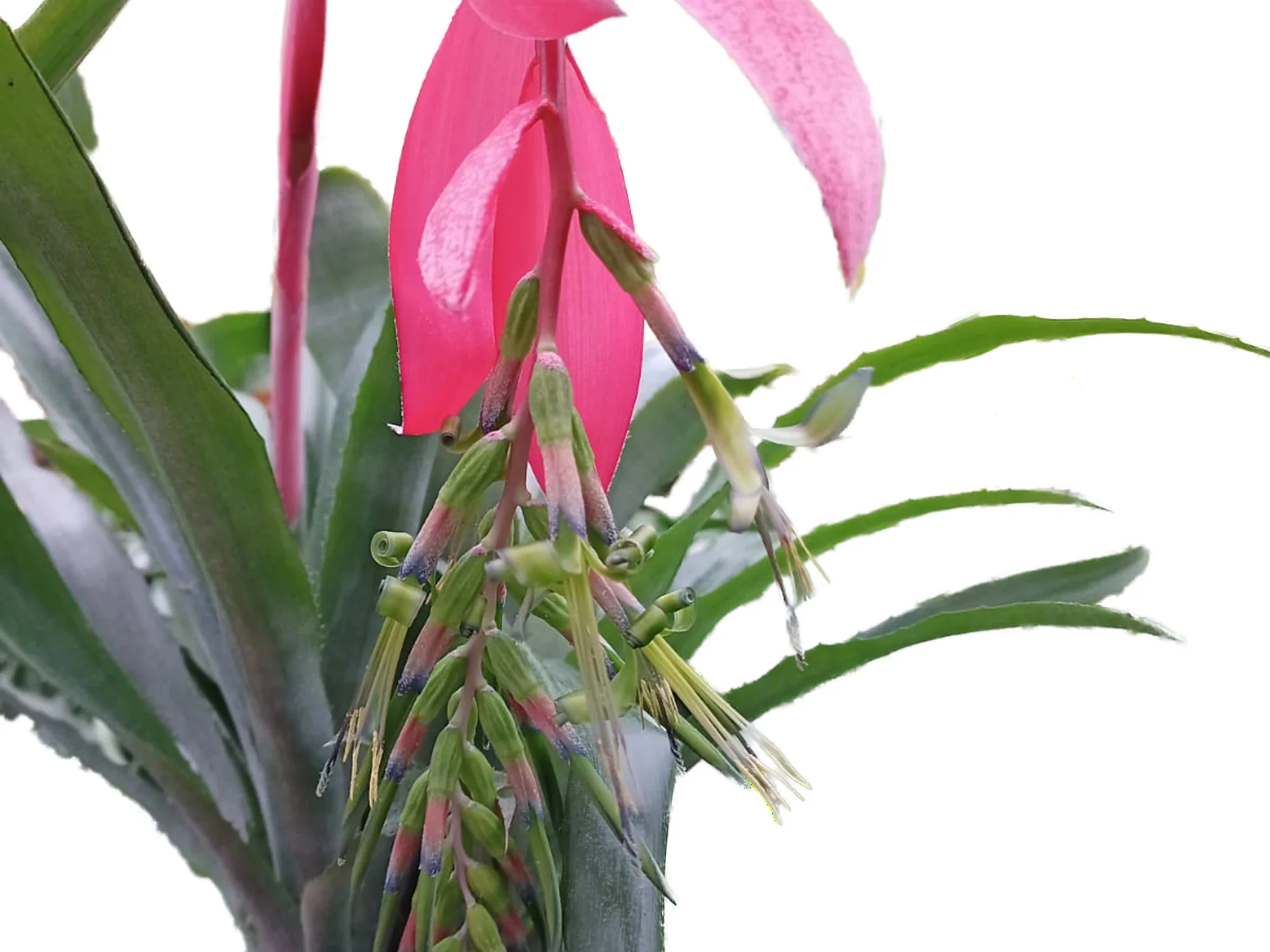
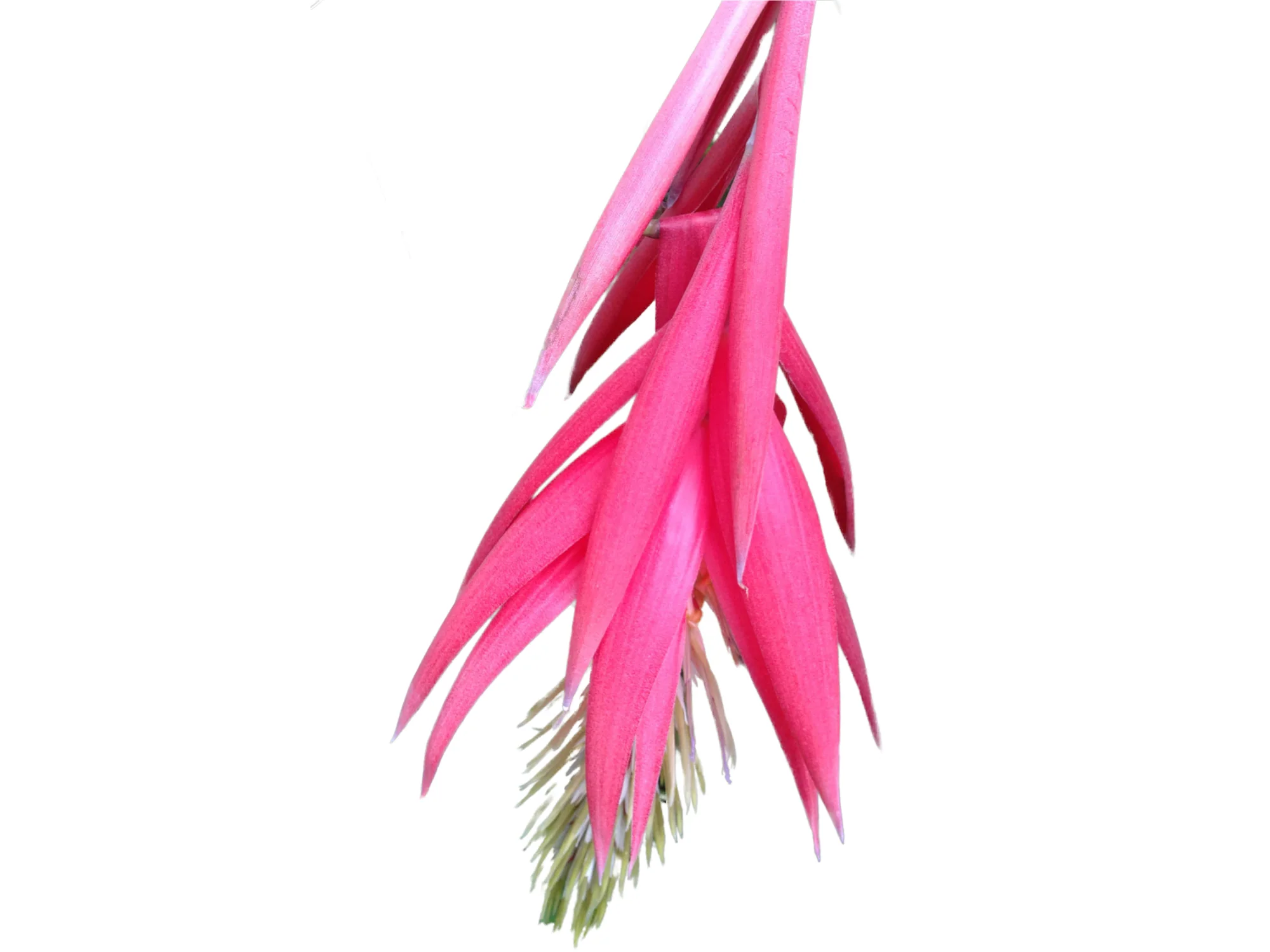
A clump-forming bromeliad from South America, producing narrow rosettes of linear-lanceolate, serrate-margined leaves and a gracefully pendant inflorescence with showy lanceolate bracts. The tubular flowers feature strongly reflexed petals with rolled tips and prominent exserted stamens — a delicate, nodding floral structure that gives the species its common name, Queen's Tears.
- Light: Bright indirect to filtered direct light; tolerates more sun than most bromeliads, which encourages stronger flowering.
- Temperature: 45–85°F (7–29°C); a highly adaptable species that tolerates a wide temperature range, including brief cold spells.
- Humidity: 40–70%; less demanding than most bromeliads and adapts well to average indoor humidity levels.
- Watering: Keep the central cup filled with fresh water and change it regularly; water the substrate when the top layer begins to dry, allowing good drainage.
Additional Notes
Billbergia nutans is one of the most adaptable and free-flowering bromeliads in cultivation. It offsets freely after blooming, forming dense clumps over time. Best grown in a well-draining bromeliad or bark-based mix; shipped as a well-established plant.
Product Information
Product Information
Shipping & Returns
Shipping & Returns
Billbergia nutans
Billbergia nutans
A clump-forming bromeliad from South America, producing narrow rosettes of linear-lanceolate, serrate-margined leaves and a gracefully pendant inflorescence with showy lanceolate bracts. The tubular flowers feature strongly reflexed petals with rolled tips and prominent exserted stamens — a delicate, nodding floral structure that gives the species its common name, Queen's Tears.
- Light: Bright indirect to filtered direct light; tolerates more sun than most bromeliads, which encourages stronger flowering.
- Temperature: 45–85°F (7–29°C); a highly adaptable species that tolerates a wide temperature range, including brief cold spells.
- Humidity: 40–70%; less demanding than most bromeliads and adapts well to average indoor humidity levels.
- Watering: Keep the central cup filled with fresh water and change it regularly; water the substrate when the top layer begins to dry, allowing good drainage.
Additional Notes
Billbergia nutans is one of the most adaptable and free-flowering bromeliads in cultivation. It offsets freely after blooming, forming dense clumps over time. Best grown in a well-draining bromeliad or bark-based mix; shipped as a well-established plant.
Original: $20.00
-65%$20.00
$7.00Product Information
Product Information
Shipping & Returns
Shipping & Returns
Description
A clump-forming bromeliad from South America, producing narrow rosettes of linear-lanceolate, serrate-margined leaves and a gracefully pendant inflorescence with showy lanceolate bracts. The tubular flowers feature strongly reflexed petals with rolled tips and prominent exserted stamens — a delicate, nodding floral structure that gives the species its common name, Queen's Tears.
- Light: Bright indirect to filtered direct light; tolerates more sun than most bromeliads, which encourages stronger flowering.
- Temperature: 45–85°F (7–29°C); a highly adaptable species that tolerates a wide temperature range, including brief cold spells.
- Humidity: 40–70%; less demanding than most bromeliads and adapts well to average indoor humidity levels.
- Watering: Keep the central cup filled with fresh water and change it regularly; water the substrate when the top layer begins to dry, allowing good drainage.
Additional Notes
Billbergia nutans is one of the most adaptable and free-flowering bromeliads in cultivation. It offsets freely after blooming, forming dense clumps over time. Best grown in a well-draining bromeliad or bark-based mix; shipped as a well-established plant.