Dracula terborchii
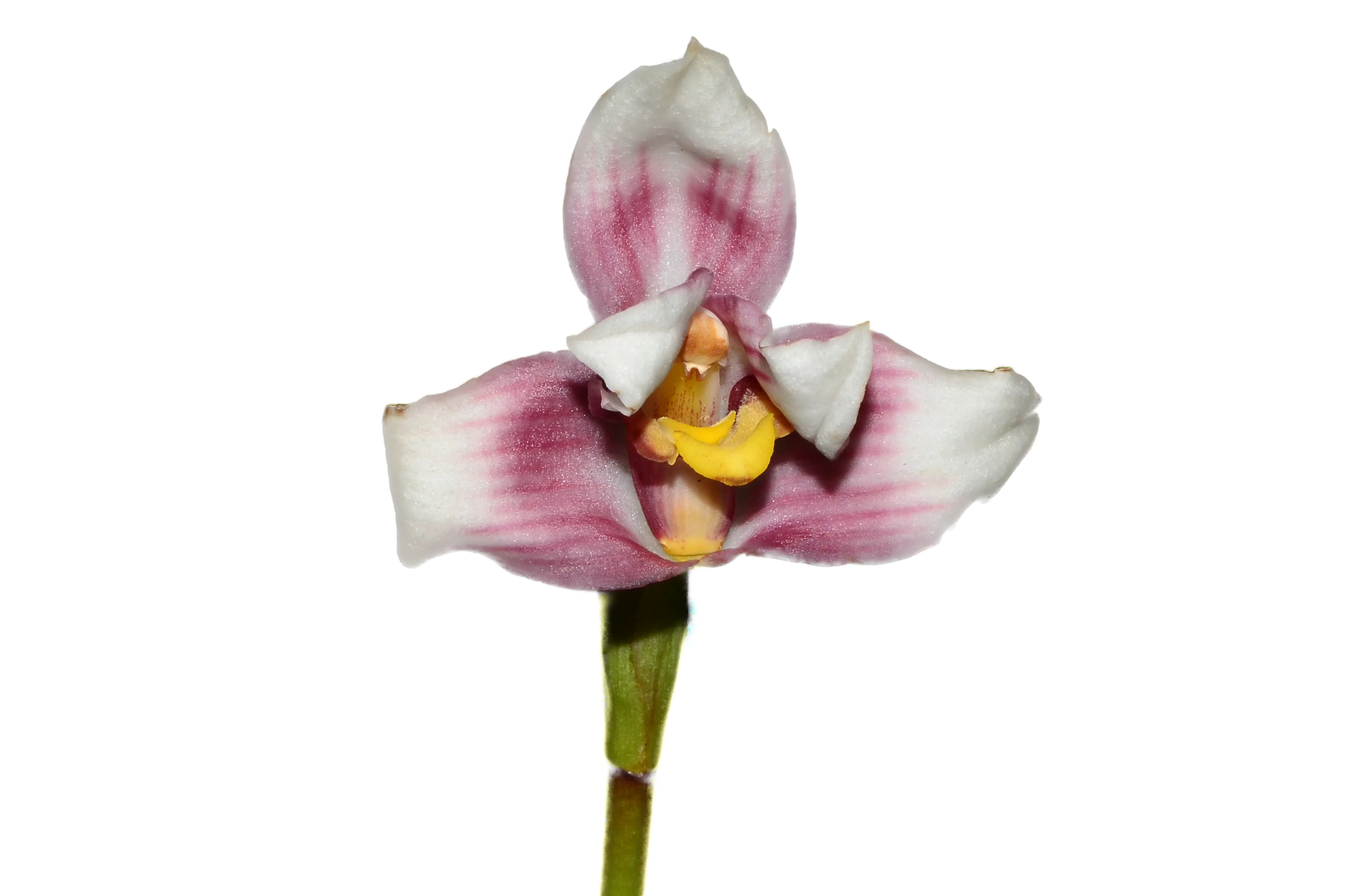
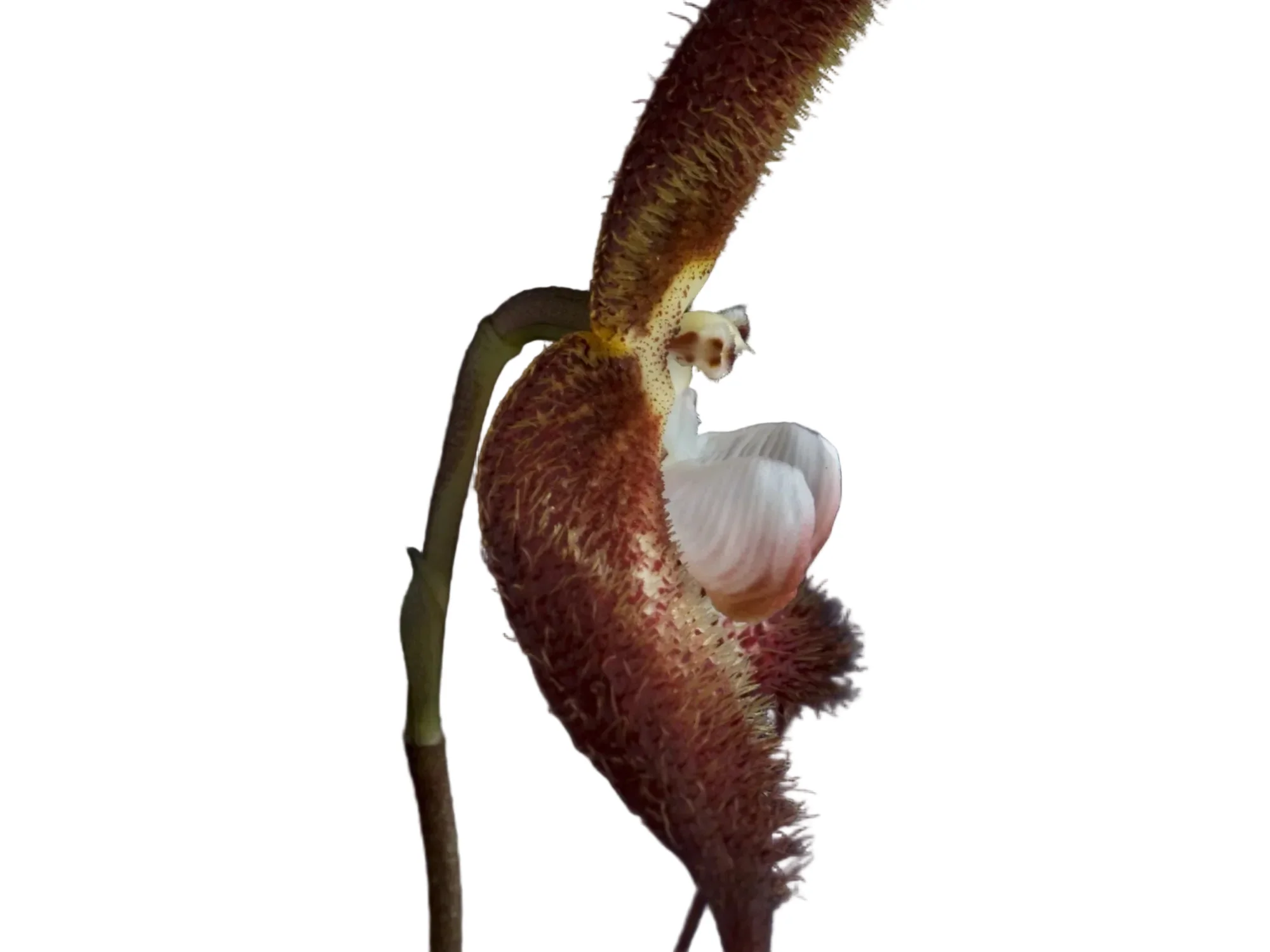
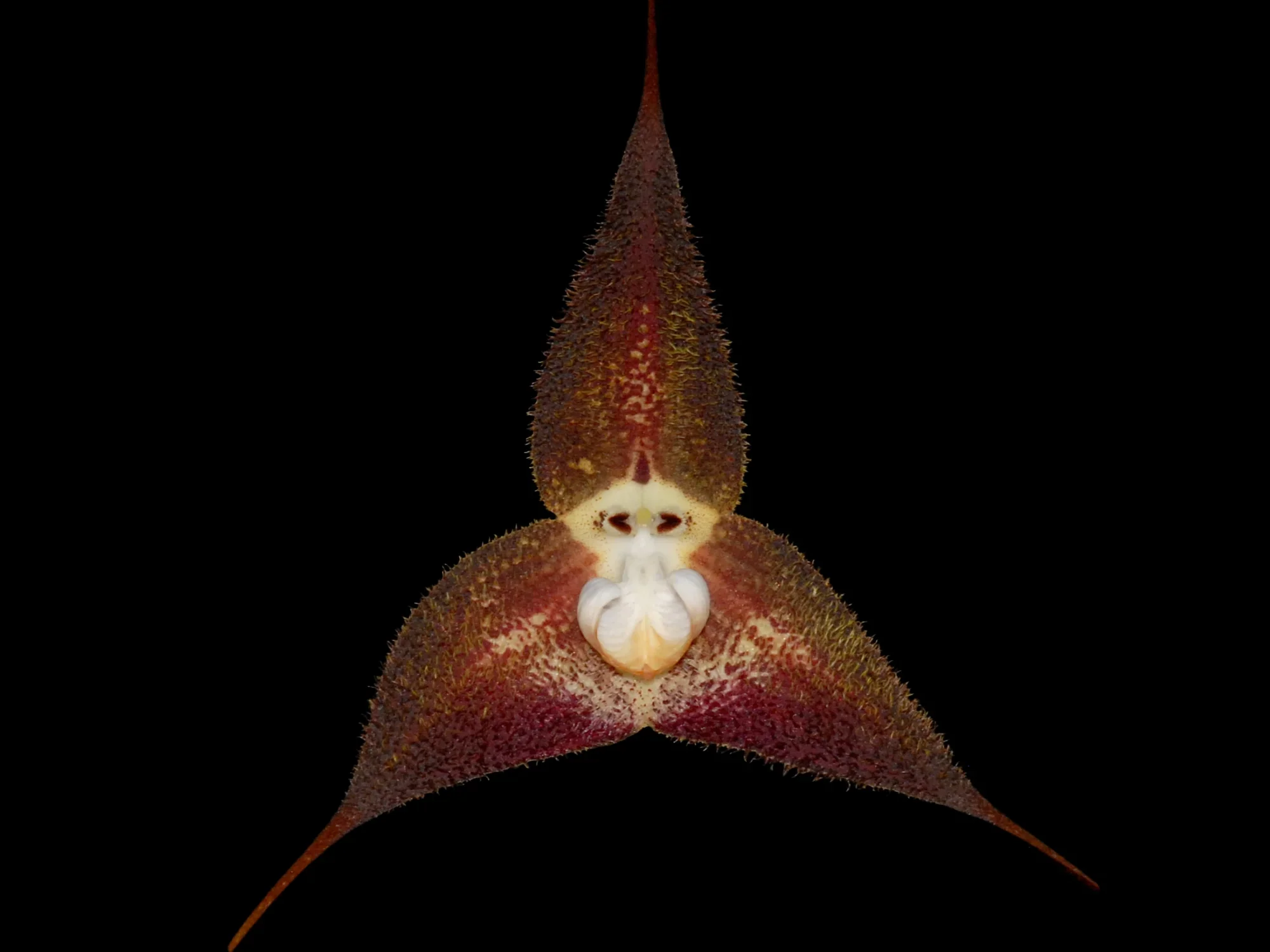
A rare and captivating species from the cloud forests of Ecuador, producing pendant flowers on drooping spikes with densely hirsute, reddish-brown sepals that form a globose, fur-covered structure, from which a small, pristine white lip emerges.
- Light: Low to moderate indirect light with 60–70% shade cloth; avoid any direct sun, which quickly damages the delicate foliage.
- Temperature: 55–72°F (13–22°C); intermediate grower. Consistent cool nights are important for long-term health and blooming.
- Humidity: 80–95%; Dracula species require very high humidity at all times. Strong air movement is essential to prevent rot despite the high moisture levels.
- Watering: Keep the mix evenly moist at all times; Dracula have no pseudobulbs and cannot tolerate drought. Water frequently but ensure excellent drainage to avoid root suffocation.
Additional Notes
Best grown in a basket or slotted container to allow pendant spikes to emerge downward freely. Use a fine sphagnum or bark mix with excellent aeration. Shipped bare root with a healthy, well-established root system — ready to mount or basket-plant upon arrival.
Product Information
Product Information
Shipping & Returns
Shipping & Returns
Dracula terborchii
Dracula terborchii
A rare and captivating species from the cloud forests of Ecuador, producing pendant flowers on drooping spikes with densely hirsute, reddish-brown sepals that form a globose, fur-covered structure, from which a small, pristine white lip emerges.
- Light: Low to moderate indirect light with 60–70% shade cloth; avoid any direct sun, which quickly damages the delicate foliage.
- Temperature: 55–72°F (13–22°C); intermediate grower. Consistent cool nights are important for long-term health and blooming.
- Humidity: 80–95%; Dracula species require very high humidity at all times. Strong air movement is essential to prevent rot despite the high moisture levels.
- Watering: Keep the mix evenly moist at all times; Dracula have no pseudobulbs and cannot tolerate drought. Water frequently but ensure excellent drainage to avoid root suffocation.
Additional Notes
Best grown in a basket or slotted container to allow pendant spikes to emerge downward freely. Use a fine sphagnum or bark mix with excellent aeration. Shipped bare root with a healthy, well-established root system — ready to mount or basket-plant upon arrival.
Original: $20.00
-65%$20.00
$7.00Product Information
Product Information
Shipping & Returns
Shipping & Returns
Description
A rare and captivating species from the cloud forests of Ecuador, producing pendant flowers on drooping spikes with densely hirsute, reddish-brown sepals that form a globose, fur-covered structure, from which a small, pristine white lip emerges.
- Light: Low to moderate indirect light with 60–70% shade cloth; avoid any direct sun, which quickly damages the delicate foliage.
- Temperature: 55–72°F (13–22°C); intermediate grower. Consistent cool nights are important for long-term health and blooming.
- Humidity: 80–95%; Dracula species require very high humidity at all times. Strong air movement is essential to prevent rot despite the high moisture levels.
- Watering: Keep the mix evenly moist at all times; Dracula have no pseudobulbs and cannot tolerate drought. Water frequently but ensure excellent drainage to avoid root suffocation.
Additional Notes
Best grown in a basket or slotted container to allow pendant spikes to emerge downward freely. Use a fine sphagnum or bark mix with excellent aeration. Shipped bare root with a healthy, well-established root system — ready to mount or basket-plant upon arrival.