Zootrophion dodsonii (Big)
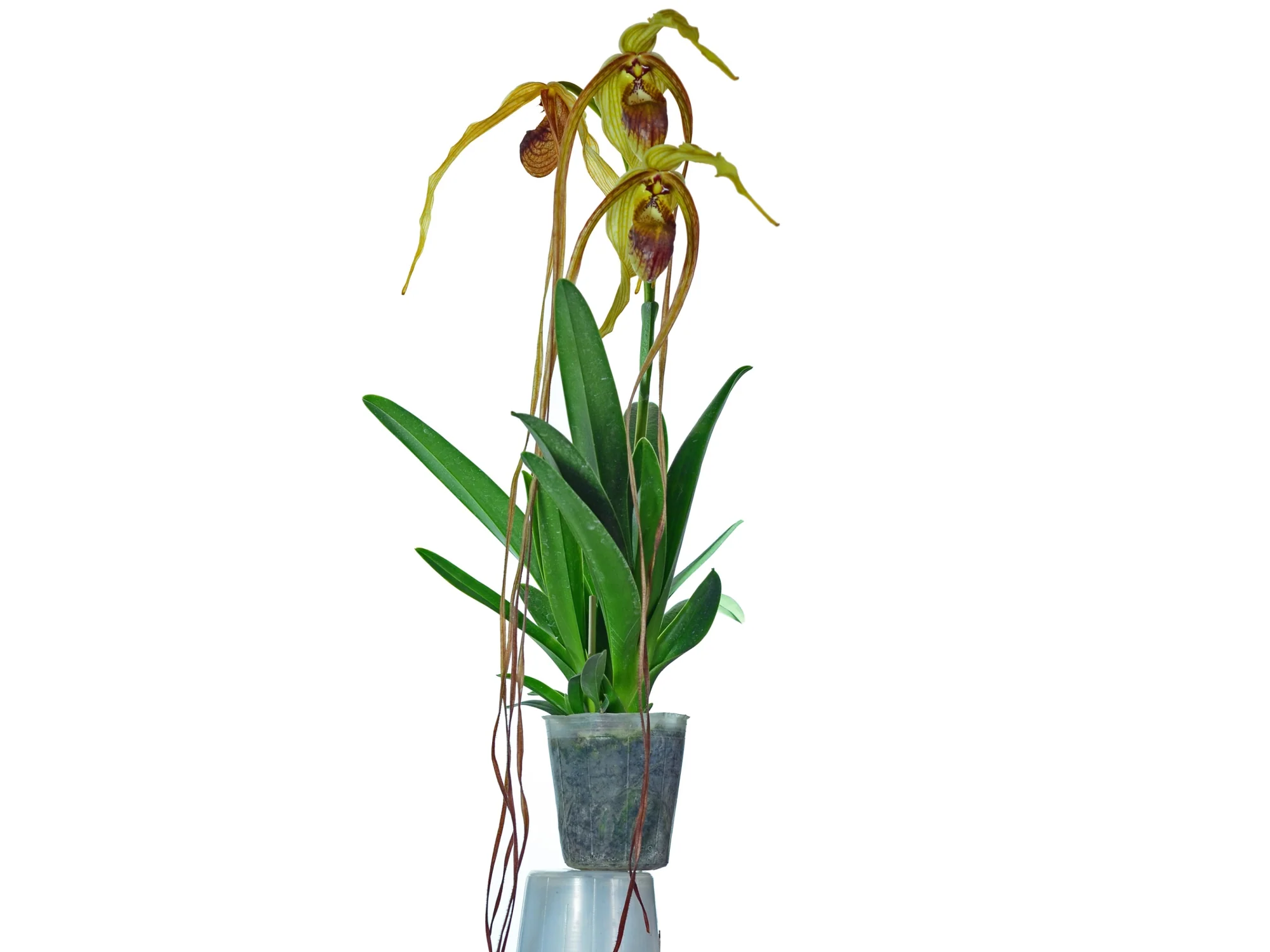
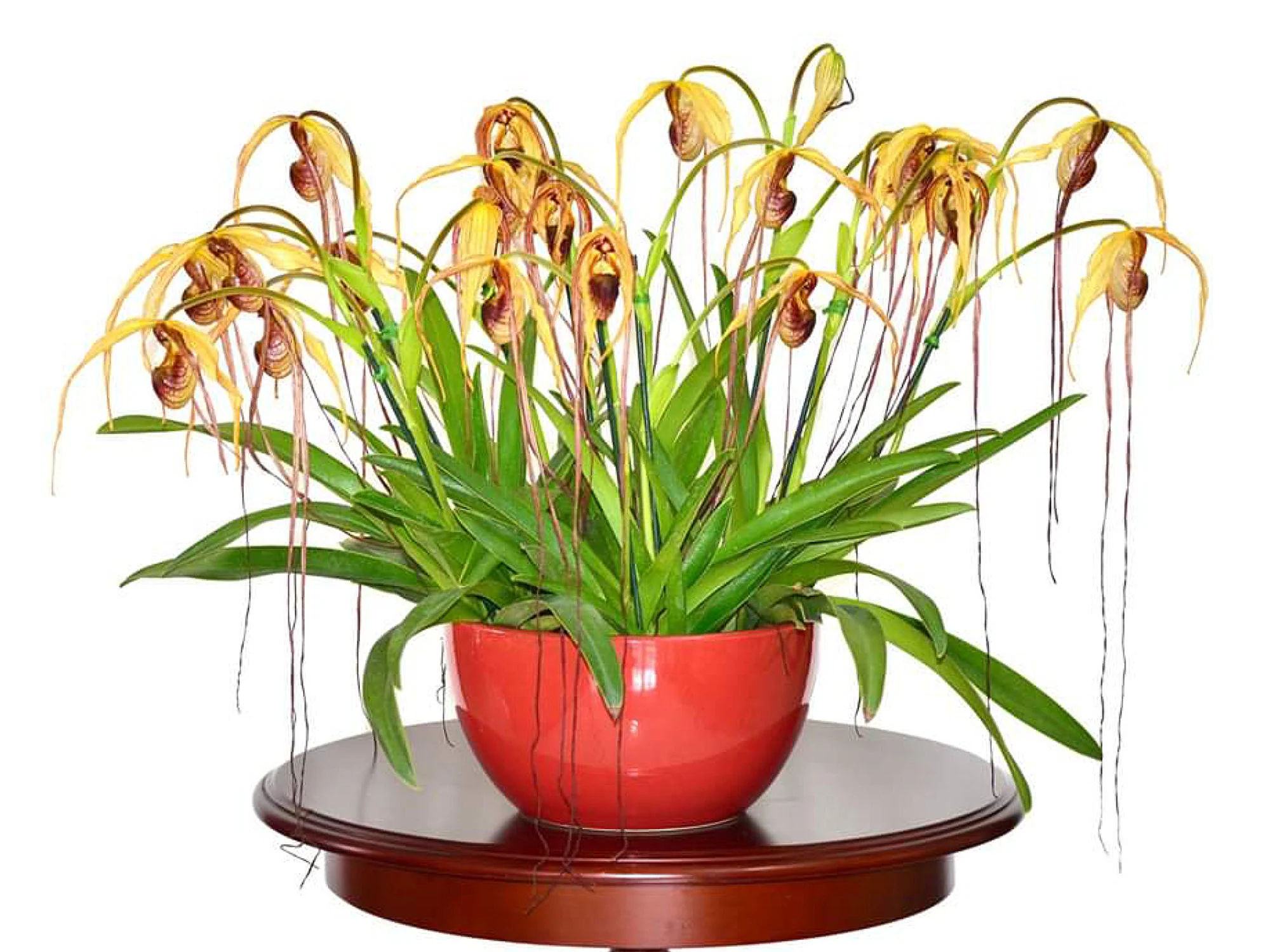
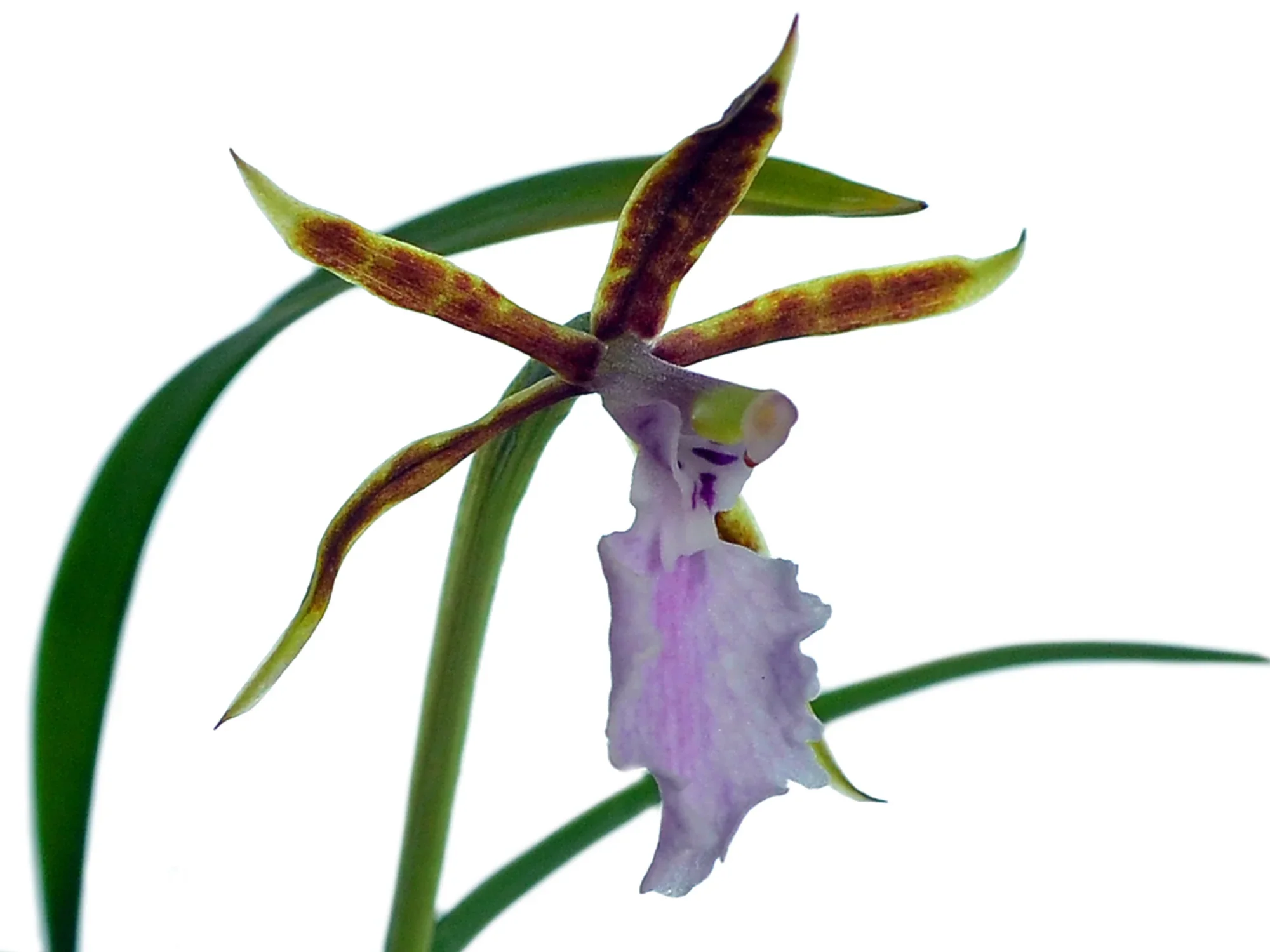
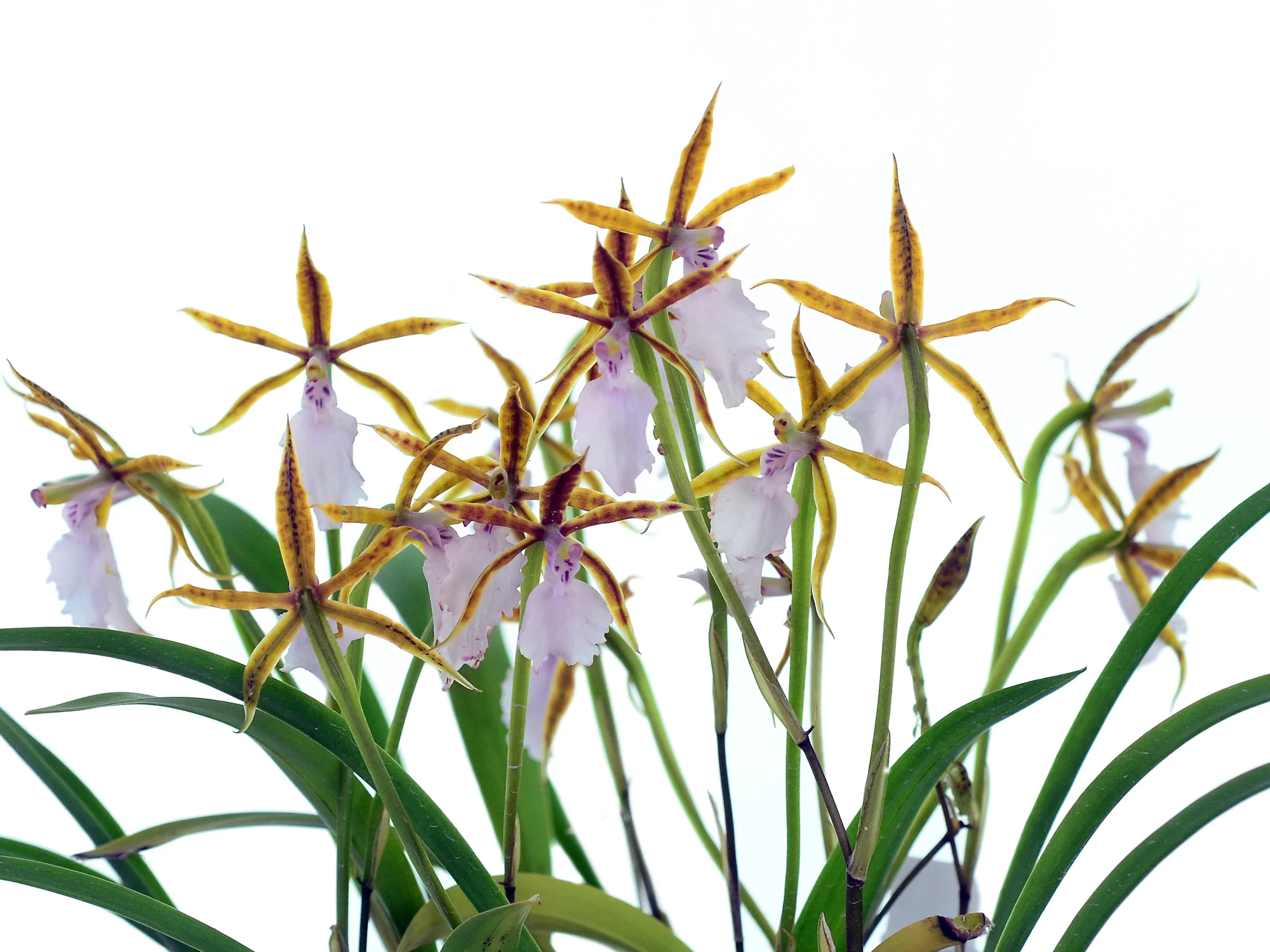
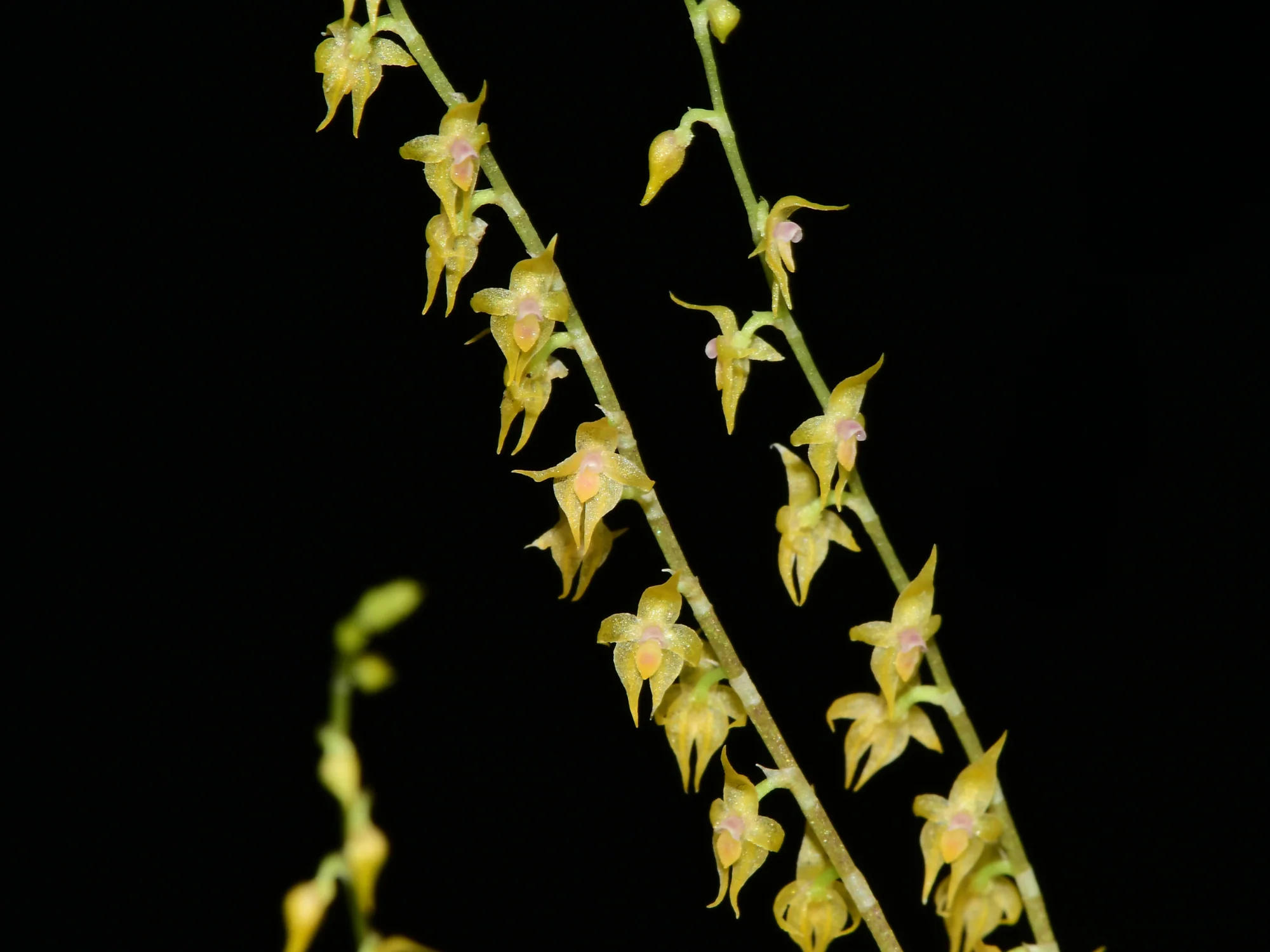
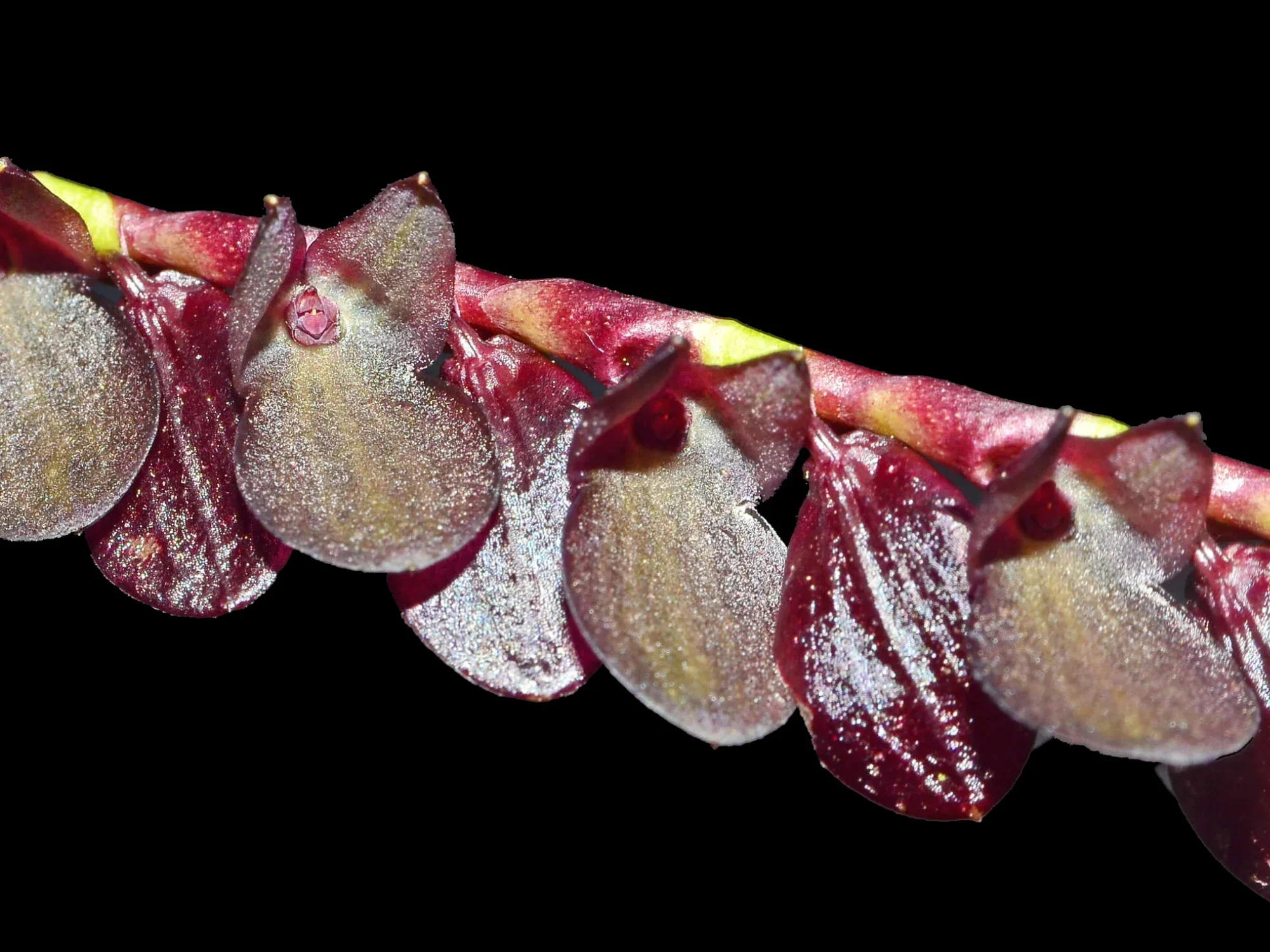
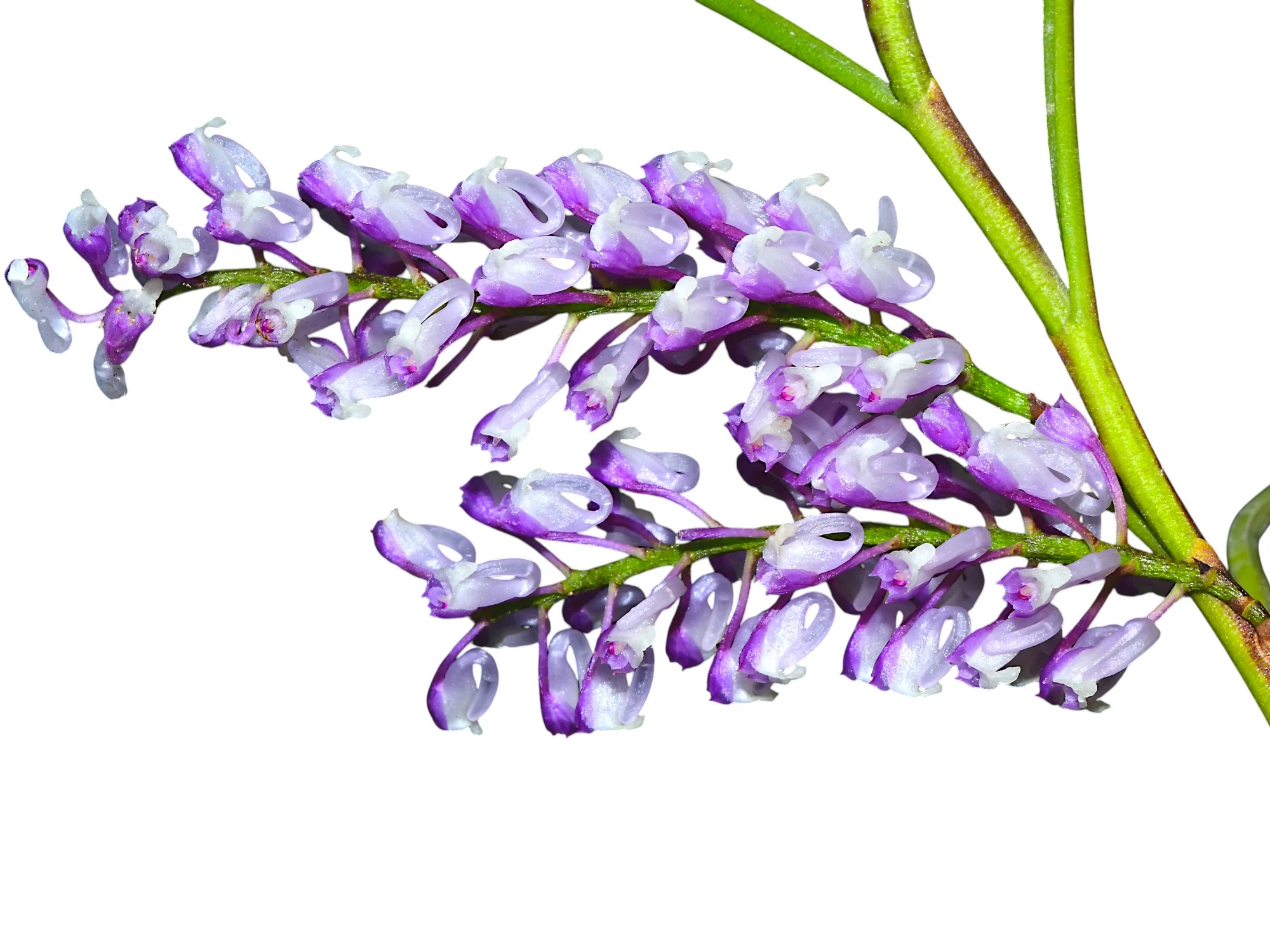
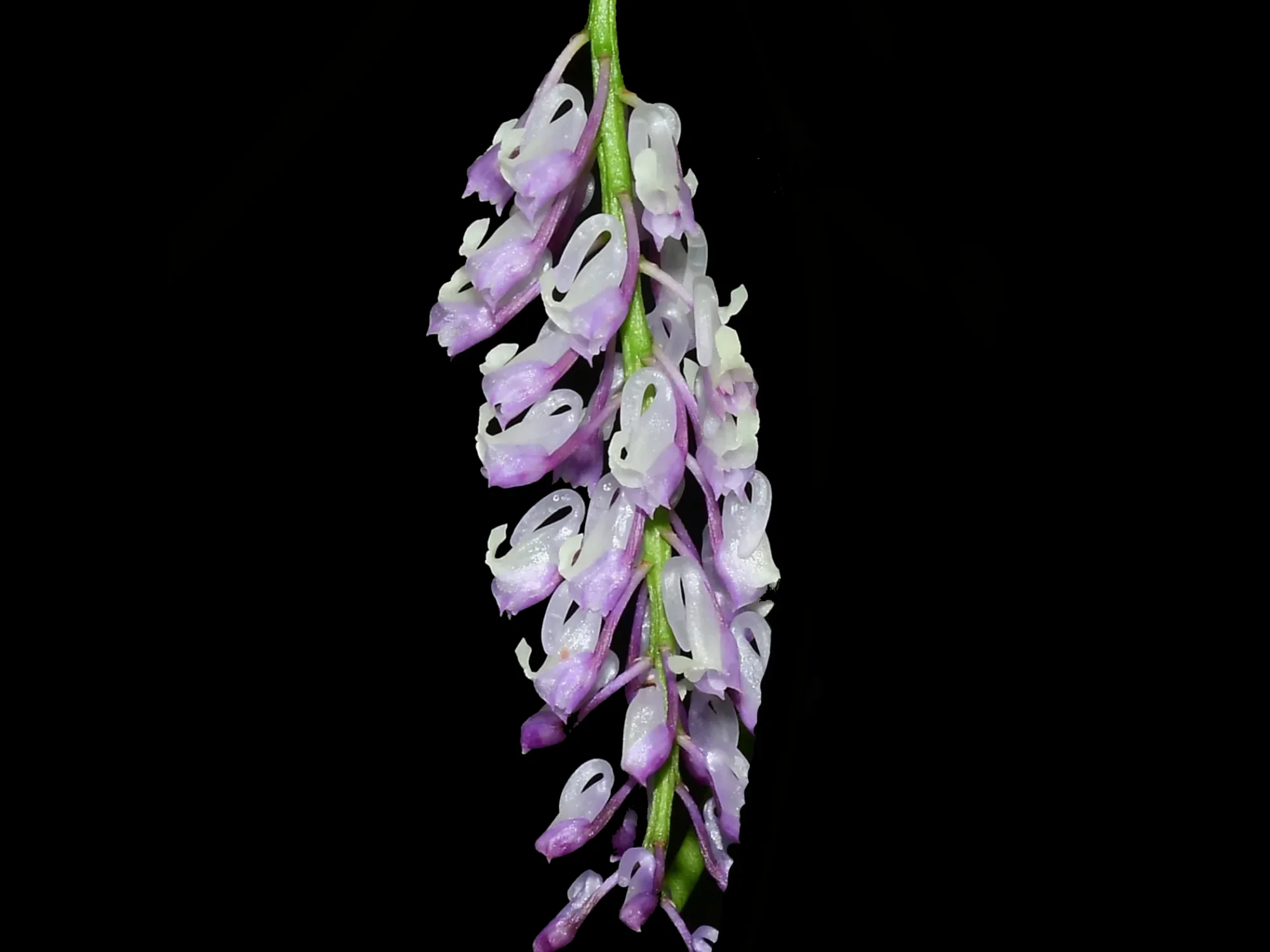
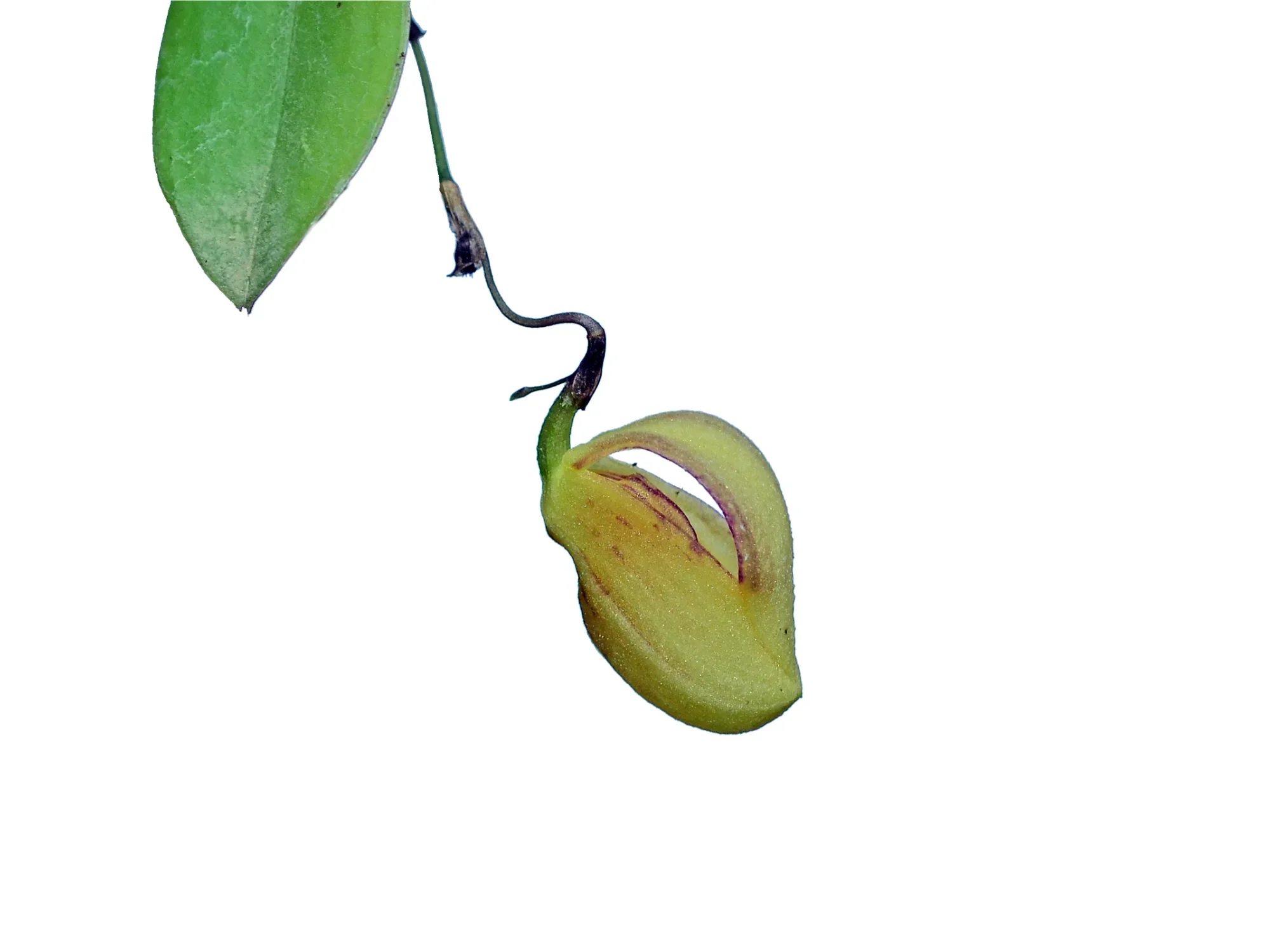
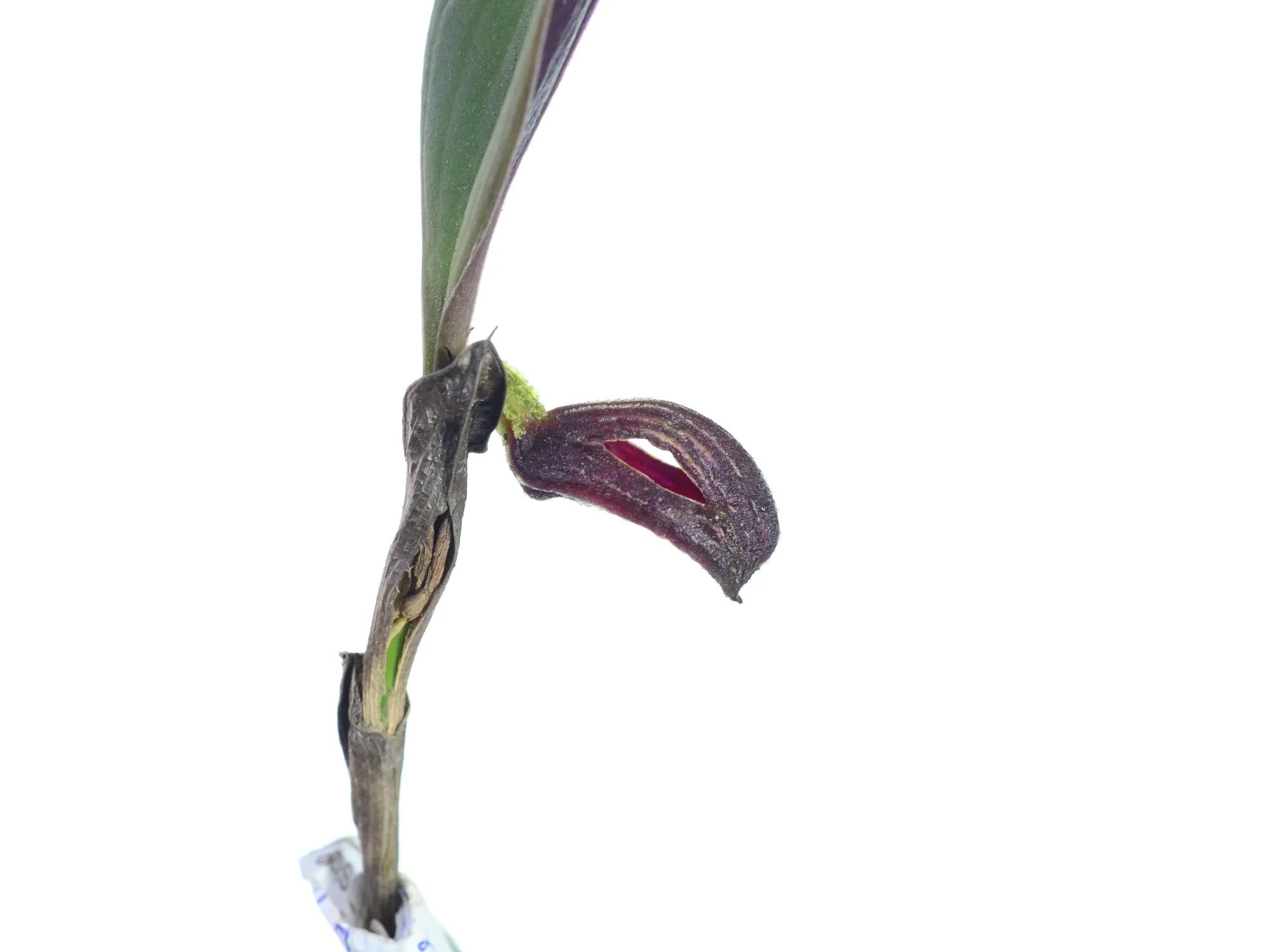
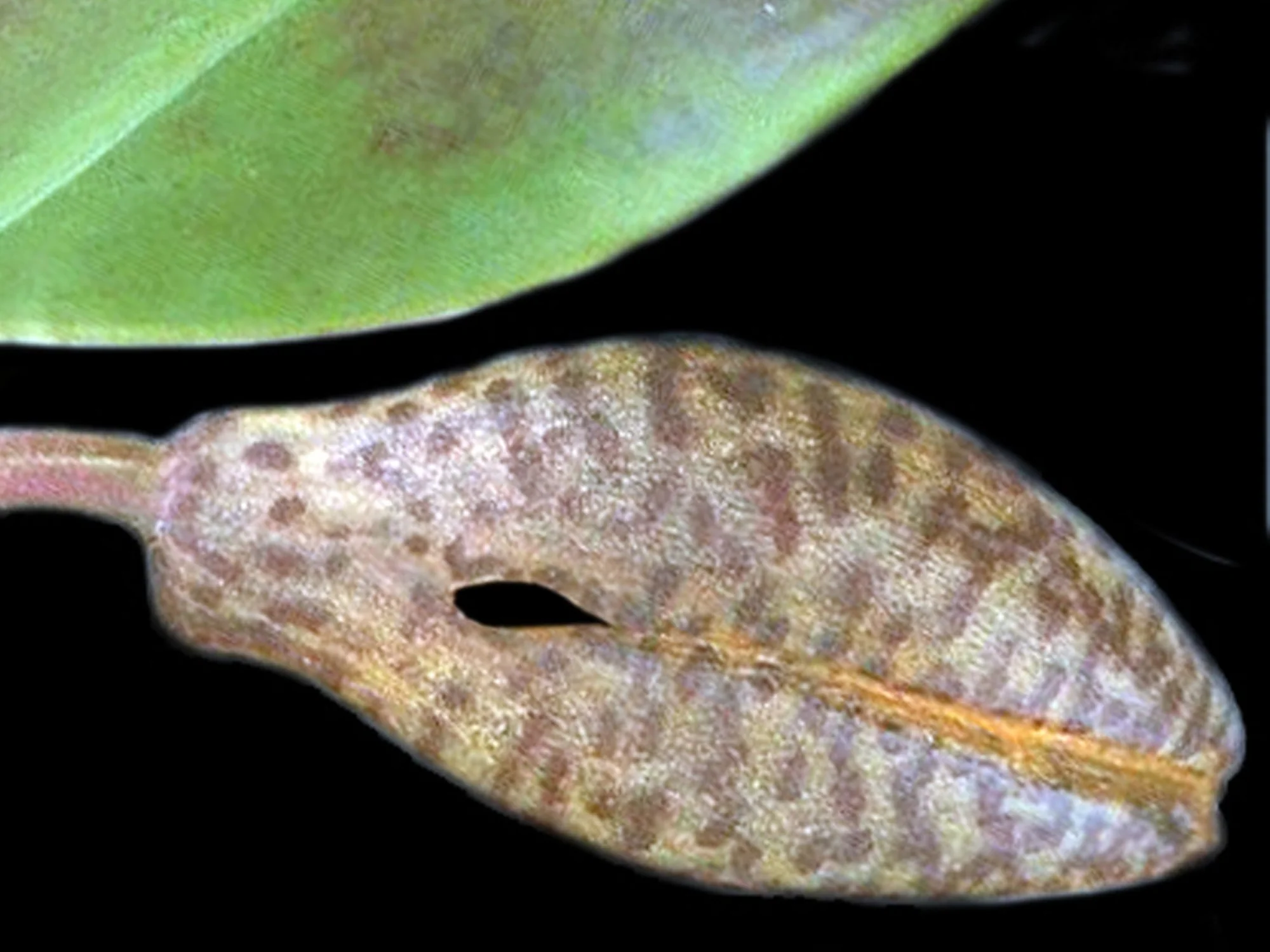
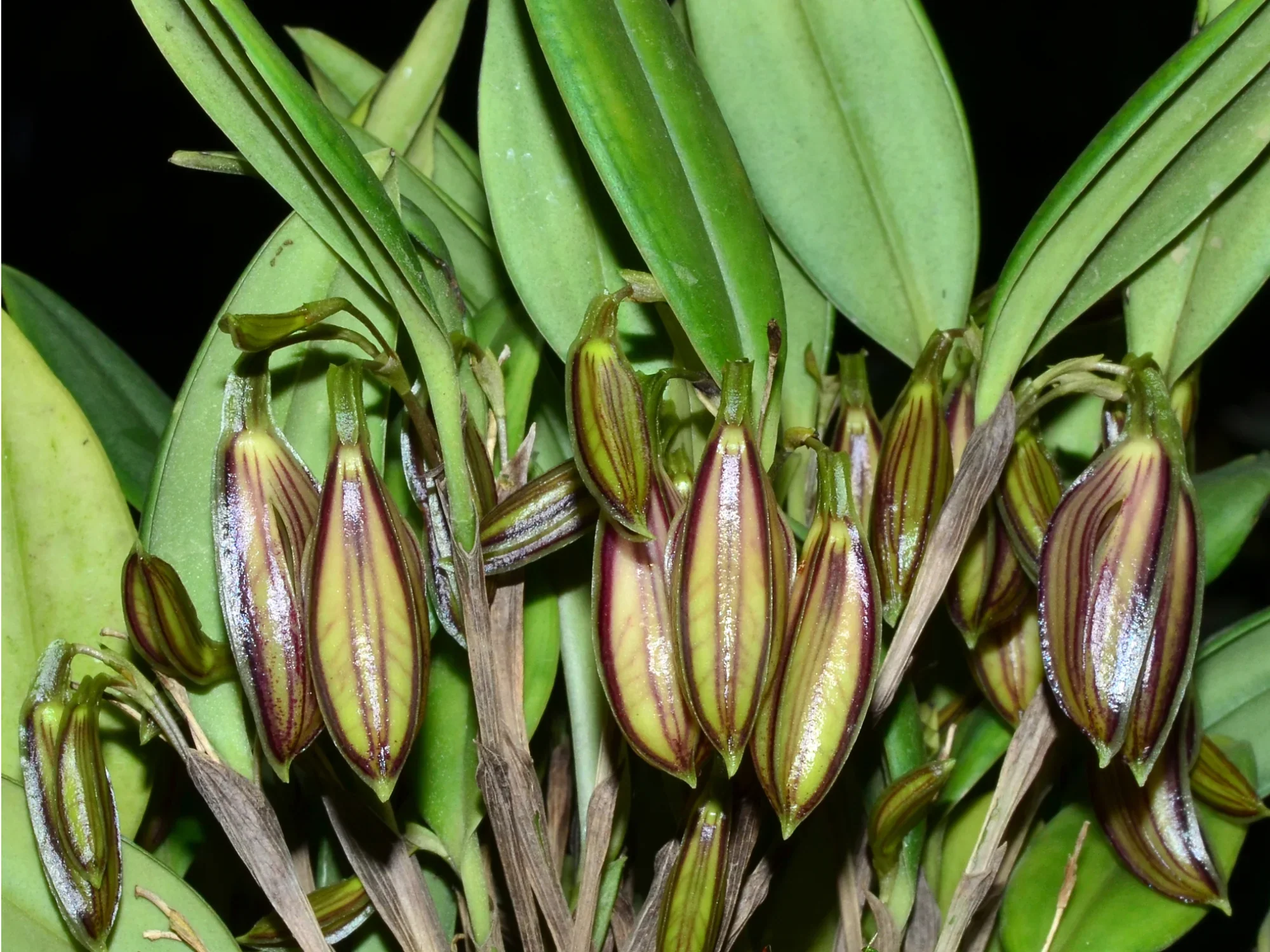
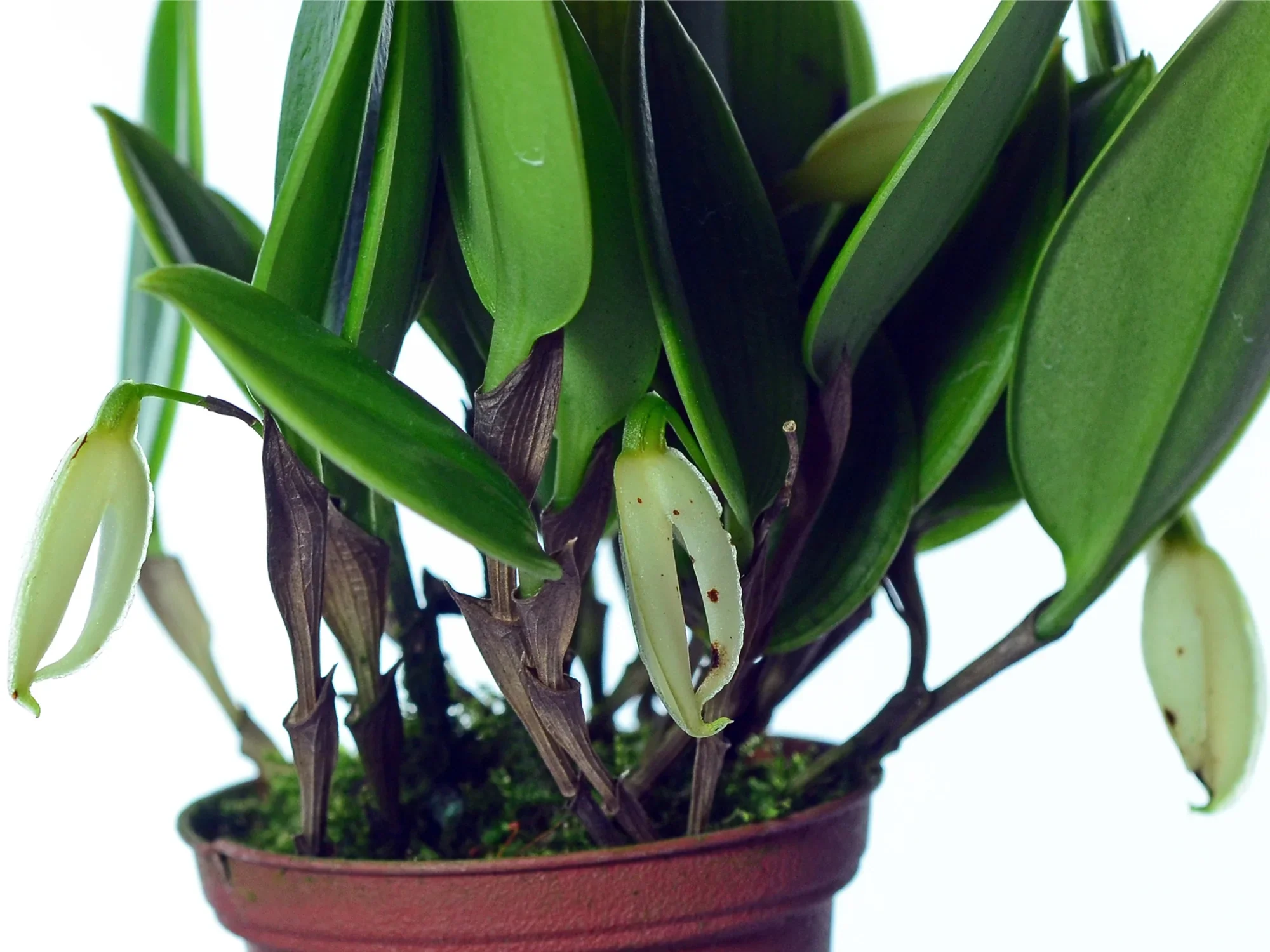
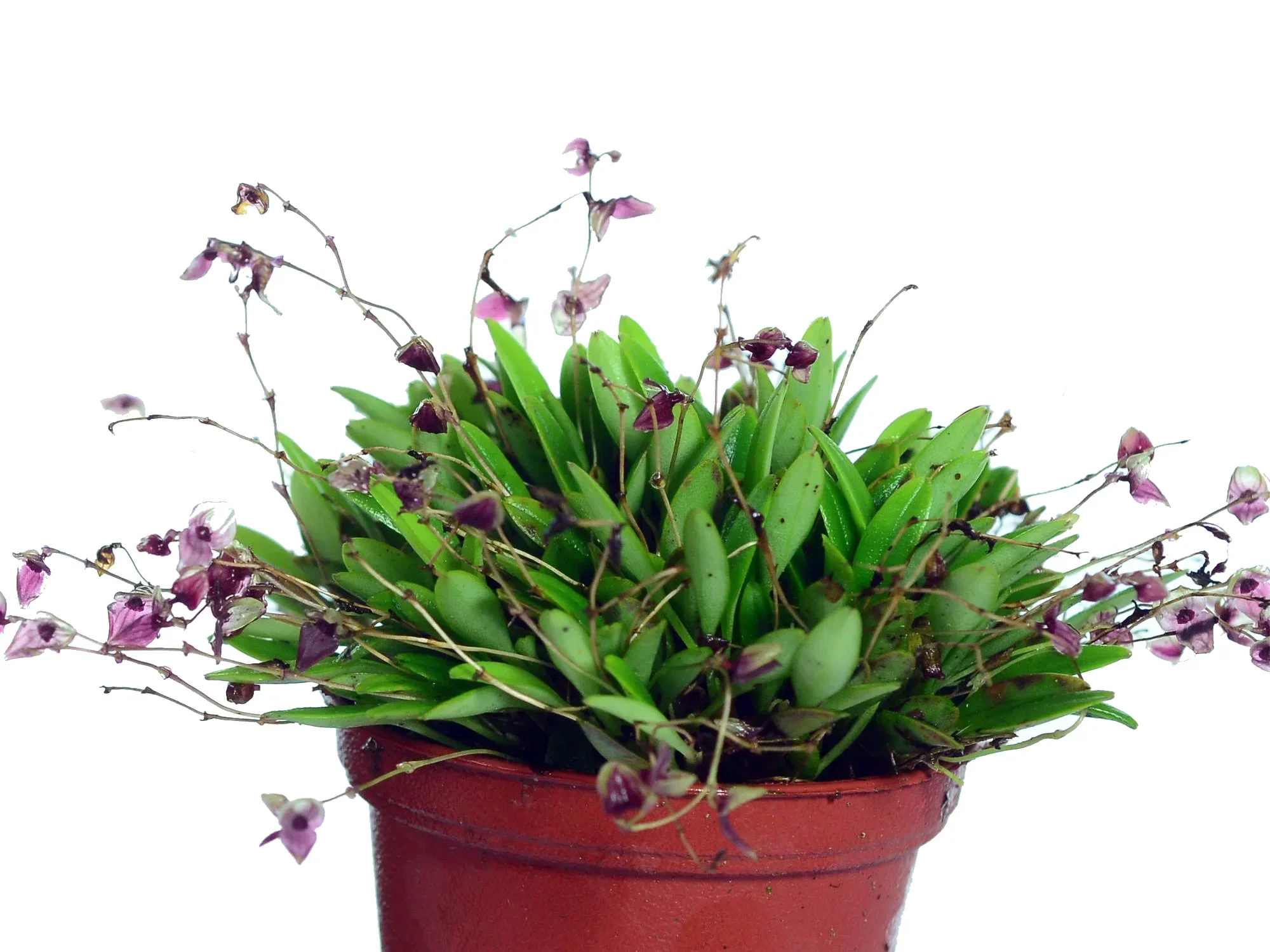
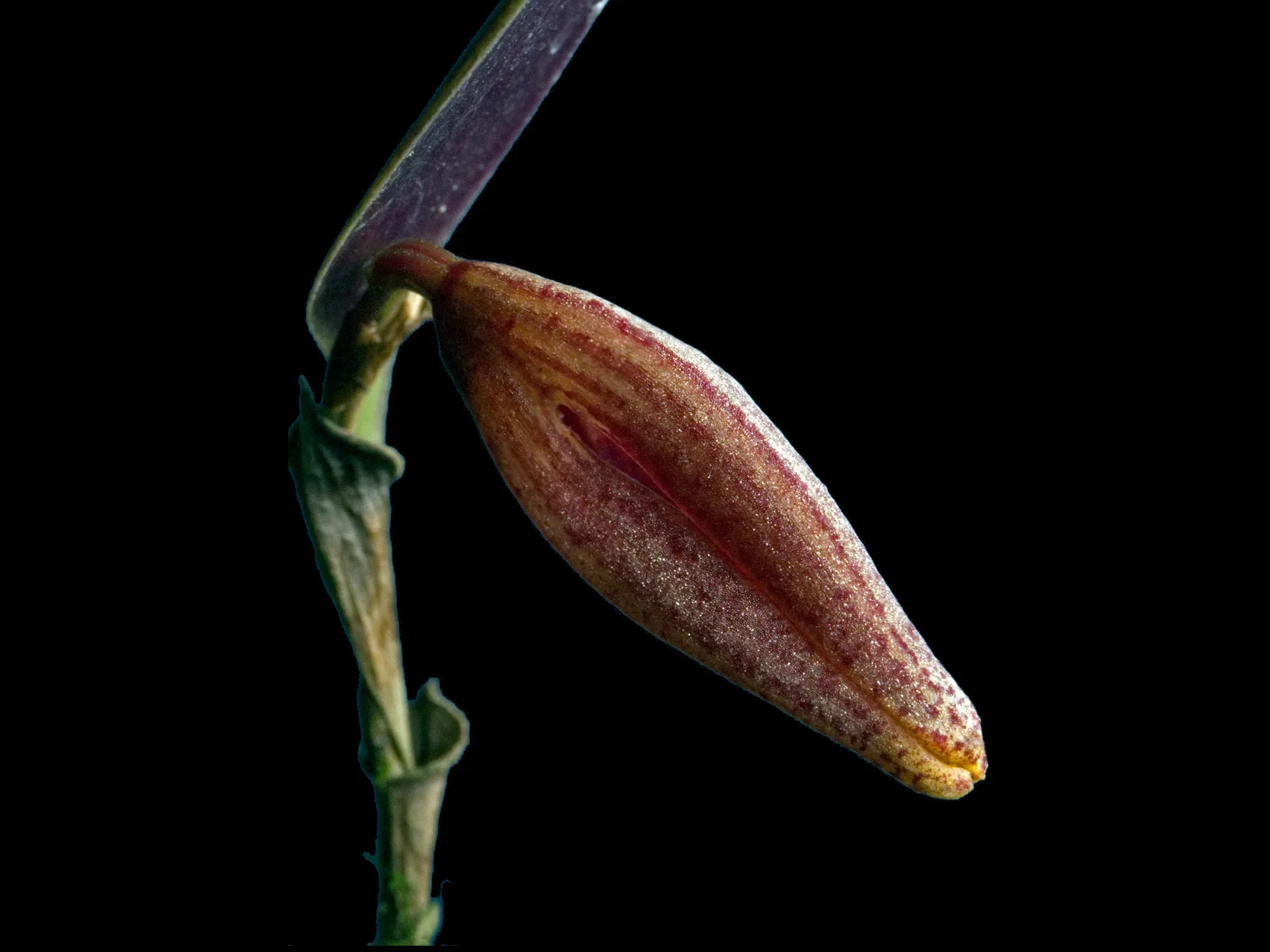
A large, well-established division of this architecturally distinct epiphyte from the cloud forests of Ecuador, with erect, fusiform pseudobulbs bearing narrow, lanceolate leaves — a markedly upright habit that sets it apart from other species in the genus. The solitary pendant flower is among the most sculptural in Zootrophion: a slender, elongated fusiform structure of fused sepals densely covered in fine papillose texture, with reddish-brown tones and golden highlights at the base.
- Light: Moderate indirect light with 55–65% shade cloth; avoid direct sun, which can stress the narrow foliage.
- Temperature: 58–72°F (14–22°C); an intermediate grower that benefits from consistent temperatures and good airflow.
- Humidity: 65–85%; high humidity supports vigorous growth and regular blooming cycles.
- Watering: Water thoroughly and allow the mix to approach dryness between waterings; fusiform pseudobulbs provide moderate drought tolerance.
Additional Notes
Blooms repeatedly throughout the year directly from the pseudobulb base. Best grown in a pot with coarse bark or sphagnum moss with excellent drainage. A rare and sculpturally elegant species for the discerning collector. Ships bare-root in excellent condition.
Product Information
Product Information
Shipping & Returns
Shipping & Returns

Zootrophion dodsonii (Big)
Zootrophion dodsonii (Big)
A large, well-established division of this architecturally distinct epiphyte from the cloud forests of Ecuador, with erect, fusiform pseudobulbs bearing narrow, lanceolate leaves — a markedly upright habit that sets it apart from other species in the genus. The solitary pendant flower is among the most sculptural in Zootrophion: a slender, elongated fusiform structure of fused sepals densely covered in fine papillose texture, with reddish-brown tones and golden highlights at the base.
- Light: Moderate indirect light with 55–65% shade cloth; avoid direct sun, which can stress the narrow foliage.
- Temperature: 58–72°F (14–22°C); an intermediate grower that benefits from consistent temperatures and good airflow.
- Humidity: 65–85%; high humidity supports vigorous growth and regular blooming cycles.
- Watering: Water thoroughly and allow the mix to approach dryness between waterings; fusiform pseudobulbs provide moderate drought tolerance.
Additional Notes
Blooms repeatedly throughout the year directly from the pseudobulb base. Best grown in a pot with coarse bark or sphagnum moss with excellent drainage. A rare and sculpturally elegant species for the discerning collector. Ships bare-root in excellent condition.
Product Information
Product Information
Shipping & Returns
Shipping & Returns
Description
A large, well-established division of this architecturally distinct epiphyte from the cloud forests of Ecuador, with erect, fusiform pseudobulbs bearing narrow, lanceolate leaves — a markedly upright habit that sets it apart from other species in the genus. The solitary pendant flower is among the most sculptural in Zootrophion: a slender, elongated fusiform structure of fused sepals densely covered in fine papillose texture, with reddish-brown tones and golden highlights at the base.
- Light: Moderate indirect light with 55–65% shade cloth; avoid direct sun, which can stress the narrow foliage.
- Temperature: 58–72°F (14–22°C); an intermediate grower that benefits from consistent temperatures and good airflow.
- Humidity: 65–85%; high humidity supports vigorous growth and regular blooming cycles.
- Watering: Water thoroughly and allow the mix to approach dryness between waterings; fusiform pseudobulbs provide moderate drought tolerance.
Additional Notes
Blooms repeatedly throughout the year directly from the pseudobulb base. Best grown in a pot with coarse bark or sphagnum moss with excellent drainage. A rare and sculpturally elegant species for the discerning collector. Ships bare-root in excellent condition.